Why Rann Utsav Works Brilliantly for Families
Children are extraordinary observers. They notice things adults walk past — the texture of salt crystals under their feet, the way a folk dancer's skirt moves in perfect circles, the sound a camel makes when asked to kneel. Rann Utsav, with its combination of open desert space, colourful cultural programme, hands-on craft activities, and night sky unlike anything most Indian city children have ever seen, is one of the genuinely great family travel experiences in India.
This guide covers everything families need to know: which activities work for which ages, how to handle the cold nights safely with children, what to feed picky eaters, and the practical logistics that make the difference between a stressful trip and an unforgettable one.
What Age is Rann Utsav Appropriate For?
The honest answer is: from toddlers upward, with the caveat that very young children (under two) need extra attention to the cold nights in winter months, and teenagers need to know in advance that the "festival" is a cultural one rather than a music festival — set expectations correctly and they will love it.
Children between five and twelve consistently have the best time. This age group is old enough to be fully conscious of the experience and young enough to find everything magical without the self-consciousness that sometimes affects teenagers. The camel rides, the folk dance performances, the open desert under a full moon, the craft workshops — all of these land most powerfully with children in this range.
Teenagers from thirteen upward tend to be divided: those who are interested in culture, photography, or the outdoors find Rann Utsav deeply engaging. Those who are primarily interested in social media and music festivals need some convincing, but most convert once they see the salt desert under a full moon. The photography opportunities alone tend to win over most teenagers.
Activities Children Love Most
Camel Rides
The camel ride is almost universally the highlight for children at Rann Utsav. The camel rides at Dhordo are conducted on trained animals with experienced handlers, and children from around three years upward can ride (with a parent on shorter rides; accompanied by handlers on longer ones). The ride along the edge of the salt flat, particularly at sunrise or sunset, produces the kind of experience that children describe to classmates for months afterward.
Camel rides last 20-40 minutes and are available in the early morning and late afternoon. Book through the Tent City activities desk on arrival — ride slots fill quickly, especially in peak season. Cost is approximately ₹300-500 per person.
Folk Dance and Cultural Performances
The evening cultural programme runs nightly from approximately 7:30 pm and includes folk dance (including the circular Garba and the spectacular mirror-work Rajasthani dances), puppet shows, Bhavai theatre, and occasionally Sufi music. Children are riveted by the visual energy of the performances — the costumes, the movements, the fire-based acts. The puppet shows are particularly appropriate for younger children.
The evening programme typically runs for 90 minutes to two hours. For families with very young children, the first 45 minutes cover the most visually engaging acts — it is entirely acceptable to leave after the main folk dance sequence if your children are getting tired.
The White Rann Walk at Night
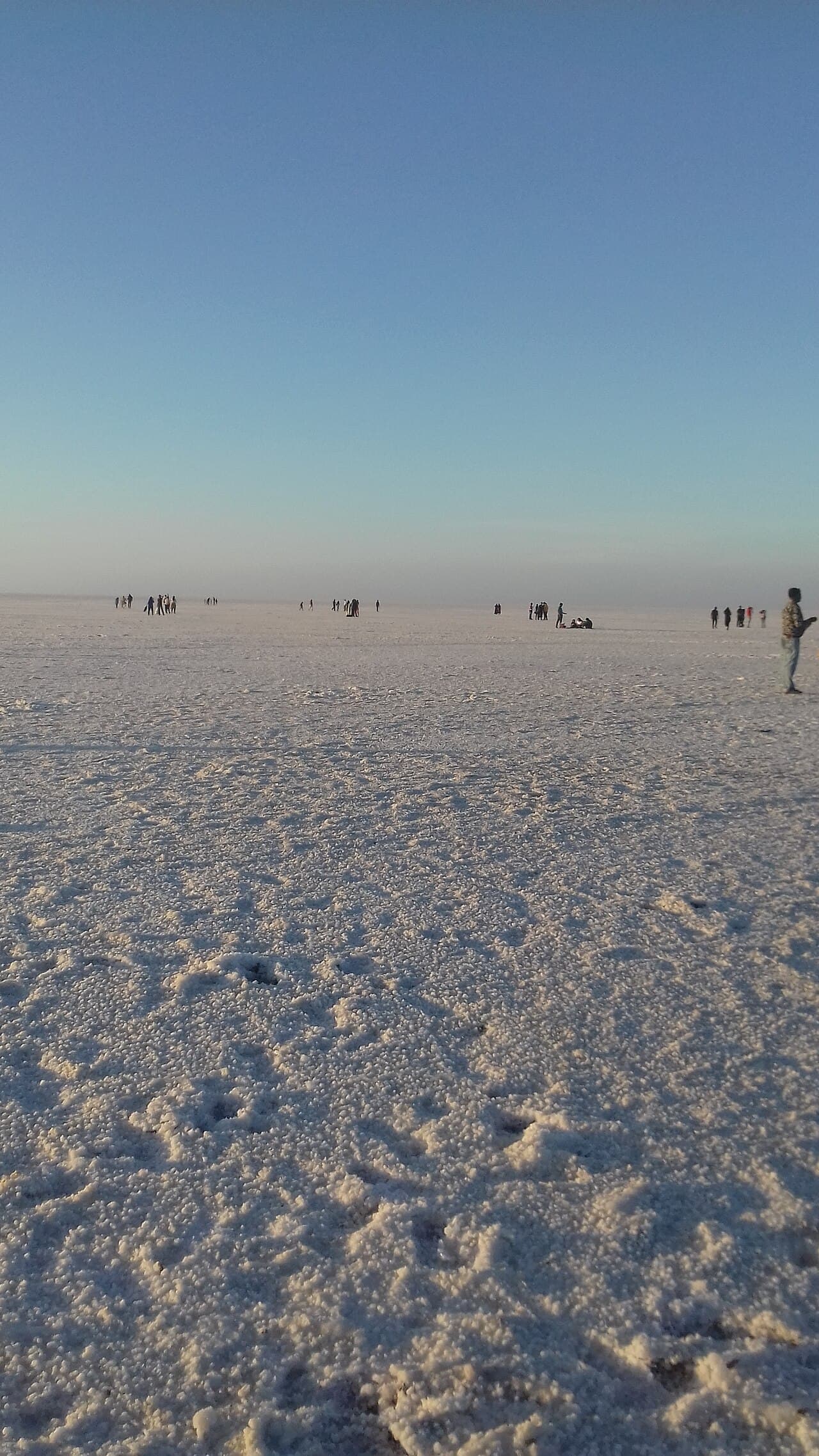
Walking onto the salt flat at night is the experience that most families cite as the one that changed how their children understood the world. The scale of the flat white expanse, the silence, the stars, the sensation of standing on a surface that goes to the horizon in every direction — it has a profound effect on children who have grown up in cities. Many parents describe their children becoming quiet and simply standing, looking, in a way they almost never do.
The walk is accessible to children who can walk steadily — the salt flat surface is mostly firm but has some uneven patches. Carry children under four. Bring a headlamp for each child and a spare for the adults. The walk typically starts around 9 pm and lasts 30-45 minutes. On full moon nights, the surface glows with enough light to walk without a torch.
Craft Workshops
The Tent City and surrounding bazaar offer hands-on craft workshops in Kutchi embroidery, block printing, clay modelling, and traditional painting. These are excellent for children aged six and above and typically last 45-60 minutes. The take-home piece — a small block-printed tote, a painted clay figure, a simple embroidered patch — is invariably one of the most treasured souvenirs of the trip.
Stargazing
Dhordo village has essentially zero light pollution. The sky on a clear night in December or January contains so many stars that children who have grown up under city skies are visibly shocked. Bring a stargazing app (SkySafari or Star Walk are good choices) and use it to trace constellations with your children. The Milky Way is visible to the naked eye on moonless nights. This is the kind of experience that introduces children to astronomy in a way no classroom ever can.
Safety Considerations for Families
Cold Nights
The biggest safety consideration for families visiting between November and February is the cold. Children, particularly those under eight, lose body heat faster than adults and may not communicate discomfort clearly until they are significantly cold. Layer your children aggressively — thermal base layer, a fleece, a down or heavy synthetic jacket, warm socks, a beanie, and gloves for evening activities. If a child starts to feel cold during the Rann walk, return to the Tent City immediately rather than persisting. The experience is wonderful; hypothermia is not.
The Salt Flat Surface
The salt flat is mostly firm but has patches where the surface is softer or has slight depressions filled with brine. Stay on the marked walking paths, especially with young children. Do not let children run ahead at night beyond torchlight range.
Sun Protection During the Day
The midday sun on the White Rann is intense even in December because the salt surface reflects UV upward as well as absorbing direct sunlight from above. Apply SPF 50+ sunscreen to children before any daytime outdoor activity and bring UV-protective sunglasses.
Accommodation for Families
Family tents at the Rann Utsav Tent City are available in the premium tier and can accommodate two adults and two to three children. Booking a family tent rather than two separate standard tents is generally more comfortable and allows children to be settled and supervised more easily.
Premium and Rajwadi tent categories include in-tent heating, which is strongly recommended for families visiting in December and January. Standard Non-AC tents rely on blankets and bedding — adequate for adults, but plan to dress children in their thermal layers for sleeping if choosing this category.
Food for Families and Picky Eaters
The Tent City dhaba serves Gujarati thali-style meals with dal, sabzi, rice, roti, and various accompaniments. The food is mild by Indian standards — Gujarat cuisine is predominantly vegetarian and non-spicy compared to many other regional cuisines. Children who eat standard Indian vegetarian food will be well-served.
For truly picky eaters who resist Indian food entirely: the Tent City does have options that most children accept — plain rice, plain roti, and mild yellow dal are available on request. Bring a small stash of familiar snacks (biscuits, cereal bars, nuts) as a backup for particularly difficult mealtimes. Fruit is usually available.
Do not assume packaged food is easily available at Dhordo — the nearest shops with the range of a city convenience store are in Bhuj, 85 km away. Bring what you know your children need.
Tips from Parents Who Have Made the Trip
The most consistent advice from families who have visited Rann Utsav with children:
Book the cultural programme seats in advance rather than hoping for walk-up availability in peak season. Arrive at the salt flat viewpoint for sunset — this is as spectacular as the moonlit walk and happens at a time of day when children are not yet tired. Accept that children will not sleep on the drive back if you time your return from the Rann walk correctly — they will be too stimulated. That is fine. Let them process.
The families who have the best time are those who treat the trip as a slow, exploratory adventure rather than a checklist. Two nights at minimum — preferably three — gives enough time for one day of activities, one evening of the cultural programme, one Rann walk, and one morning of unhurried exploration of the bazaar. One night is not enough to see everything, and children who see everything are better placed to understand what they have experienced.
Rann Utsav with children is one of the most rewarding family travel decisions you will make. The festival is designed to be inclusive, the activities are genuinely fun rather than educational-but-dull, and the landscape provides the kind of sensory encounter that changes how children see their own world. Go when they are old enough to remember it.