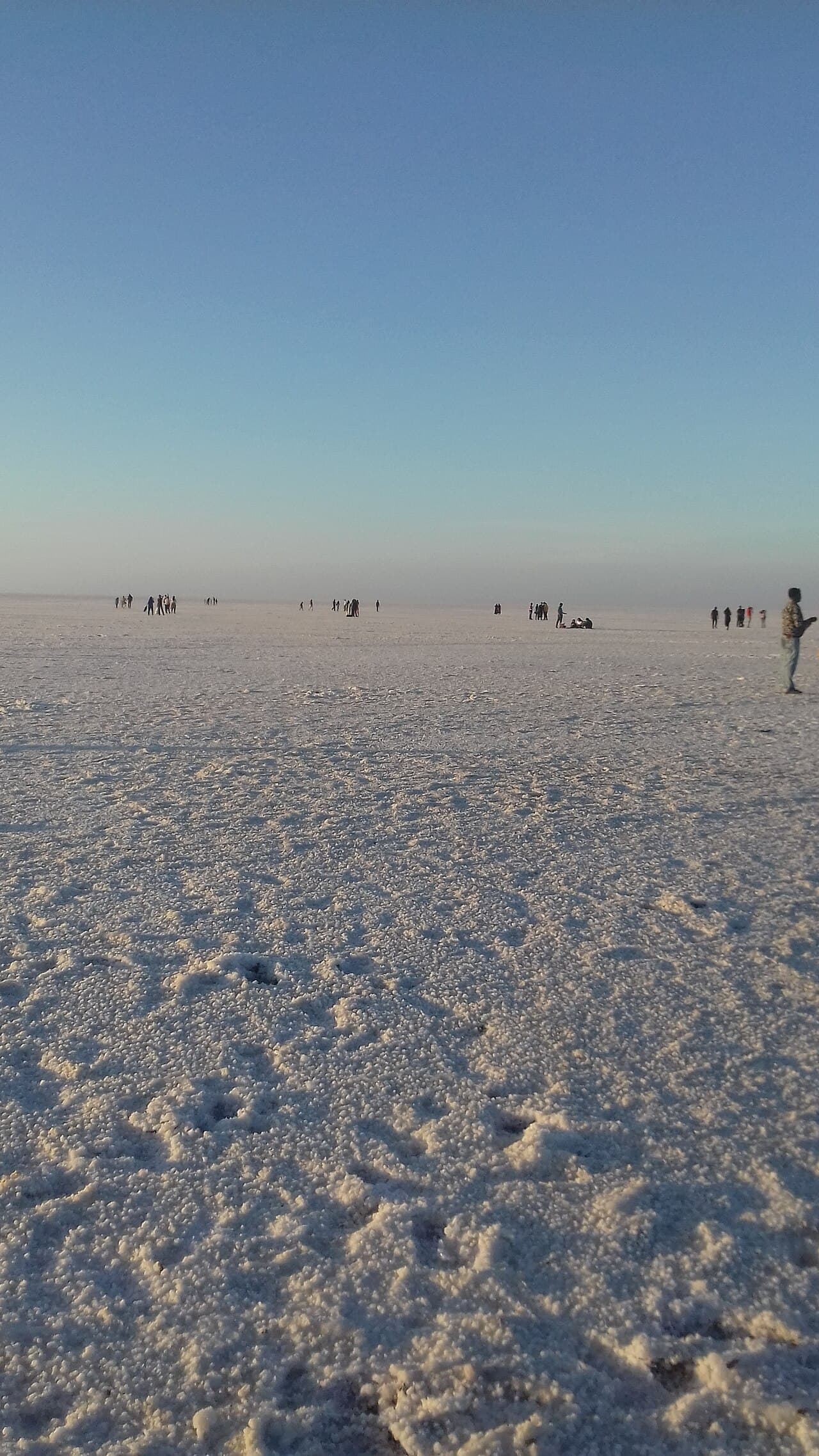
Understanding Rann Utsav Weather: A Desert with Six Faces
The White Rann of Kutch is a desert, and its weather changes considerably across the cool-weather travel period. October can suit a wider Kutch trip if local access is confirmed, while the published 2026–27 Dhordo Tent City stay season runs from 1 November to 7 March. January nights can be cold; early March is warmer. Understanding the conditions for your selected dates helps you plan the right visit.
This guide gives you a frank, month-by-month account of the weather at Rann Utsav — temperatures, rainfall, crowd levels, what to wear, and the specific conditions that make each month the best choice for a particular kind of traveller.
The Season Overview: October to March
Kutch's broader cool-weather travel period can begin in October, but the published 2026–27 Dhordo Tent City stay season is 1 November 2026 to 7 March 2027. October conditions after the monsoon vary, and an October regional visit should not be described as a bookable festival stay without provider confirmation.
Across the listed stay season, early November is generally warmer; December and January bring colder nights; February and early March gradually warm again. Check the forecast before travel and the provider's programme for your selected dates.
Month-by-Month Weather at Rann Utsav
October: Warm Arrival, Gentle Evenings
Daytime temperature: 28–32°C Night temperature: 16–20°C Rainfall: Near zero (post-monsoon drying) Crowd level: Depends on local access; Dhordo Tent City stay season has not opened What to wear: Light cotton during the day; a light jacket or long-sleeved shirt for evenings
October can be a time for wider Kutch travel, but it precedes the published Dhordo Tent City stay season. Conditions on the salt flat depend on post-monsoon drying and local access rules. Do not plan on festival accommodation or activities for October without an explicit provider confirmation.
For a Dhordo Tent City package, compare November onward. If travelling in October, arrange accommodation and access independently of the listed festival-stay calendar.
Best for: Wider Kutch travel where access and accommodation have been confirmed separately.
Photography note: October light can be attractive, but confirm that the location you want to photograph is accessible on your dates. The October full moon is outside the listed 2026–27 Dhordo stay season.
Packing for October: Two light daytime outfits per day. One long-sleeved layer for evenings. Comfortable walking shoes. Sunscreen SPF 50+ (the salt reflects UV even in October). Light windproof jacket — the desert evening breeze is noticeable even when temperatures are warm.
November: Season in Stride, First Cold Hints
Daytime temperature: 24–28°C Night temperature: 12–16°C Rainfall: Negligible Crowd level: Moderate to high (peak season beginning) What to wear: Light layers during the day; a warm jacket and scarf for evenings
November is when the Rann Utsav truly comes into its own. The salt flat has fully dried and the surface is clean, white, and crisp underfoot. The air has cleared entirely of any monsoon humidity, producing the exceptional visibility that makes the landscape photographs so striking. Night temperatures are cool — you will want a proper jacket and a scarf for the evening cultural programme and the salt flat walk — but not yet uncomfortably cold.
November falls within the published Dhordo Tent City stay season. Check the chosen provider's current accommodation and programme rather than assuming every activity is operating. If you want a moonlit visit, compare availability during the listed 22–25 November 2026 window.
Best for: First-time visitors who want the complete festival experience without the extreme cold of December and January.
Photography note: November is the first month of truly exceptional atmospheric clarity. Visibility is extraordinary, stars are dense, and the full moon creates the iconic reflective-salt-desert images that define Rann Utsav in travel photography.
Packing for November: Thermal base layer (worthwhile, especially for evenings). Down jacket or heavy fleece. Warm socks. A beanie for the salt flat walk. Sunscreen and sunglasses for the day. Light cotton for daytime activities.
December: Peak Season, Peak Cold, Peak Magic
Daytime temperature: 18–24°C Night temperature: 6–10°C Rainfall: Zero Crowd level: Very high (peak of peak season) What to wear: Full winter layering — thermals, insulating mid-layer, windproof shell, hat, gloves
December is a popular month for Rann Utsav. The published calendar lists 21–24 December 2026 as a full-moon travel window during the Christmas and New Year peak period. Nights can be cold, so check the forecast and pack layers for time on the salt flat.
The cultural programme in December is at its most elaborate: special Christmas and solstice programming, the Garba nights are their most energy-charged, and the bazaar is its busiest. Crowd levels are high, which means booking must happen 10–12 weeks in advance for preferred tent categories.
Best for: Travellers who want the most complete and atmospheric Rann Utsav experience and are prepared for cold. Photographers, honeymoon couples, and those making a specific trip to see the December full moon.
Photography note: December's cooler air and longer nights can be attractive for landscape photography. If moonlight matters to your plans, check access and stay availability for the listed 21–24 December travel window.
Packing for December: Merino wool or synthetic thermal base layers (top and bottom) — non-negotiable. Down jacket (not a light fleece — a proper down jacket). Windproof outer shell. Warm hat covering ears. Thermal gloves. Warm socks, two pairs. Warm sleeping clothes (for Non-AC tent guests). Cold and flu medication. Sunscreen SPF 50+ for daytime.
What if it rains in December? Winter rainfall in Kutch is exceptionally rare — the region averages less than 350mm annually and virtually none of it falls between October and March. In the extremely unlikely event of rain, the salt flat walk would be cancelled for safety (the wet salt surface becomes slippery), the cultural programme would move under cover, and the Tent City's permanent structures would accommodate guests. This scenario is mentioned for completeness rather than as a genuine planning consideration.
January: Deep Winter, Exceptional Photography
Daytime temperature: 18–23°C Night temperature: 4–8°C Rainfall: Zero Crowd level: High (sustained peak) What to wear: Full winter layering identical to December
January maintains the cold of December and adds a particular cultural resonance: the Uttarayan kite festival on January 14 brings an enormous regional energy to Kutch that lingers through the month. The sky over Gujarat in the weeks around Uttarayan is filled with kites from dawn to dusk — a secondary spectacle that adds to the festival atmosphere.
Night temperatures in January can dip below 5°C in cold years, and the 3 am hours on the salt flat are genuinely cold by any standard. This is not a deterrent; it is the condition that produces the clearest skies, the most luminous salt surface, and the most intensely star-dense nights of the season. Experienced Rann Utsav visitors who specifically seek the cold experience often prefer January over December.
The listed January 2027 full-moon travel window is 20–23 January. Check the provider's actual availability and rates; demand cannot be reliably inferred from the weather alone.
Best for: Return visitors, photography enthusiasts, travellers who embrace the cold, and anyone who wants the full moon experience with marginally better accommodation availability than December.
Photography note: January is considered by many professional photographers to be marginally superior to December for landscape work. The cold has settled all remaining atmospheric dust, visibility is at its maximum, and the salt surface is at its most intact and reflective.
Packing for January: Identical to December — full winter layering is essential. Add hand warmers (the chemical sachet type) for the salt flat walk if you are cold-sensitive. Lip balm and intensive hand cream, as the cold and dry air together strip moisture aggressively.
February: Gentle Warmth, Quieter Festival
Daytime temperature: 22–27°C Night temperature: 12–16°C Rainfall: Zero Crowd level: Moderate (beginning to ease) What to wear: Light layers for day; jacket and scarf for evenings; lighter than December or January
February is the month for travellers who want the full moon experience without the severe cold, or those who could not secure accommodation for the December and January peaks. The temperature has begun to soften — nights are back in the 12–16°C range rather than the single digits of deep winter — and the festival atmosphere, while still fully operational, has a slightly less frenetic energy.
February can be a comfortable choice for travellers who prefer milder evenings. The listed full-moon travel window is 18–21 February 2027; check the forecast, White Rann access and accommodation availability for your exact dates.
Best for: Couples, first-timers who missed the November–January window, and travellers who prefer milder weather.
Photography note: The photography in February is excellent, if marginally behind December and January in terms of atmospheric clarity. The warmer evenings allow longer sessions on the salt flat without discomfort, which many photographers find enables more relaxed, exploratory work.
Packing for February: Lighter than December or January. One medium-weight jacket and a scarf are sufficient for evenings. Thermal base layers are optional rather than essential. Sunscreen and hat for the day.
March: Warm Season Close, Last Chance
Daytime temperature: 28–35°C Night temperature: 18–22°C Rainfall: Zero Crowd level: Low (season winding down) What to wear: Light cotton; a light layer for evenings only
The published 2026–27 Dhordo Tent City stay season ends on 7 March. Early March may be warmer than midwinter, but dates after 7 March should not be presented as part of this stay season. Confirm your chosen property's final check-out and programme before making onward plans.
The site's calendar lists 1–7 March 2027 as the closing week, with no confirmed full-moon stay window in March. Check availability for an early-March stay; do not rely on a late-March Tent City package.
Best for: Travellers considering the published closing week, subject to provider availability and quoted rates.
Photography note: March golden hour is beautiful — the low-angle sun at sunset creates long shadows across the salt that are comparable to October in quality. Night photography is slightly less striking than winter months (warmer air means marginally less clarity), but still far superior to any urban location.
Packing for March: Light cotton throughout. A single light jacket or pashmina shawl for evenings. Sunscreen is more important in March than in any other month — UV intensity is rising with the approaching summer. Sunglasses with UV protection. Comfortable walking shoes (the salt flat surface is warm during the day in March).
Best Time for Photography: December and January
For photographers interested in moonlit salt-flat views, December and January are popular choices. The published 2026–27 travel windows are 21–24 December and 20–23 January; confirm access and conditions for the particular night you choose.
Best Time for Budget: Compare November and Early March
The published stay season starts in November and closes on 7 March. Compare written quotes for your exact dates and accommodation category; do not assume an October package or an automatic end-of-season discount.
What to Wear: A Quick Reference
Scroll across to compare all columns.
| Month | Day Wear | Evening/Night Wear |
|---|---|---|
| October | Light cotton | Light jacket + scarf |
| November | Light layers | Down jacket + warm socks + scarf |
| December | Light layers | Thermals + down jacket + hat + gloves |
| January | Light layers | Thermals + down jacket + hat + gloves + hand warmers |
| February | Light layers | Medium jacket + scarf |
| March | Light cotton | Light jacket or shawl |
The single most common mistake first-time Rann Utsav visitors make is underestimating the night-time cold in December and January. The desert has no trees, no buildings, and no windbreaks — the wind crosses the salt flat unimpeded. A jacket that works in Delhi in January may be insufficient at Dhordo at midnight. Pack for a degree colder than you think you need.