Two Tent Cities, Two Entirely Different Journeys
The Rann Utsav is commonly understood as a single experience — the White Rann, the festival, the salt desert at midnight. But in practice, there are two distinct tent cities that anchor the broader experience, and they offer meaningfully different versions of a Kutch winter trip. Dhordo sits at the heart of the festival, two kilometres from the main White Rann viewpoint, pulsing with activity and cultural energy. Dholavira, on the island of Khadir Bet, is quieter, slower, and paired with one of India's most significant and underappreciated archaeological sites.
Choosing between them is not a question of one being better than the other — it is a question of what kind of journey you want. This guide takes you through both, in detail, so you can make the right call.
Dhordo: The Beating Heart of the Festival
The Setting
Dhordo is a small village in the Bhuj taluka of Kutch, sitting on the edge of the Great Rann — the vast seasonal salt marsh that transforms, in winter, into a blinding white expanse that stretches to the horizon. The tent city here is the official, government-operated flagship of the Rann Utsav, and it is built to accommodate thousands of visitors simultaneously while still feeling, somehow, like a curated experience rather than a crowd-management operation.
The tent city is a small township in itself: rows of Swiss Cottages and Rajwadi Cottages arranged along lit pathways, a central dining area, a cultural performance space, artisan bazaars, and activity zones. At peak season, it buzzes with energy from early morning — when guests depart for the salt desert in jeeps and on camels — through late evening, when the folk performances give way to open-air socialising under an extraordinary canopy of stars.
The White Rann Experience from Dhordo
The Rann viewpoint — the official point from which guests walk onto the salt desert — is approximately two kilometres from the Dhordo tent city. Transport by jeep or camel is available; many guests walk the distance, which takes twenty to twenty-five minutes on a flat, well-trodden path.
The viewpoint itself is a raised platform from which the scale of the Rann becomes fully apparent. In daylight, the white salt stretches away into a pale shimmer. At full moon — the most celebrated nights of the festival — it becomes luminous, the salt crystals reflecting moonlight so completely that the horizon dissolves and you seem to be standing on the edge of a white sea.
From Dhordo, you can visit the Rann viewpoint at multiple times: for sunrise, for the golden hour before sunset, and for the full-moon night that is the festival's centrepiece. The proximity and the organised transport make these visits easy to plan and execute.
The Cultural Programme at Dhordo
The Dhordo tent city hosts the full Rann Utsav cultural programme — and it is genuinely impressive. Evenings feature Garba dances, Bhavai folk performances, Kalbelia from Rajasthan, puppet shows, and occasionally classical music and film-music performances for special dates. The schedule rotates through the festival season, so guests staying multiple nights encounter different acts each evening.
The artisan bazaar — Rann Bazar — operates throughout the day and showcases Kutchi craft: Rogan art, Ajrakh block printing, Bandhani textiles, traditional jewellery, and terracotta work. These are not tourist-facing imitations — many of the artisans here are masters of their craft, working in techniques that have been passed down for generations. It is possible to spend an entire afternoon here, watching work being made and understanding the cultural context that gives it meaning.
Activities Available at Dhordo
The activity roster at Dhordo is comprehensive. Camel rides across the salt flat are among the most popular. ATV rides on the Rann are available at an additional cost. Paramotoring — a motorised paragliding experience — gives aerial views of the salt desert that are genuinely staggering. Cultural workshops, including folk dance sessions and craft demonstrations, are available for those who want to participate rather than observe.
For families, the variety of activities is a significant advantage. Children can be occupied across multiple interests — animals, physical adventure, craft — while adults have their own parallel experiences.
Who Is Dhordo Best For?
Dhordo is the right choice if the Rann Utsav festival experience is your primary objective. If you want the full cultural programme, the bustle of the artisan bazaar, the convenience of organised activities, and the iconic full-moon night at the White Rann viewpoint, Dhordo delivers all of this completely and reliably.
It is also the better choice for first-time visitors to Kutch, for families with children, for groups travelling together, and for anyone whose Rann Utsav bucket-list experience centres on the festival atmosphere rather than the heritage context.
Dholavira: The Heritage Alternative
The Setting
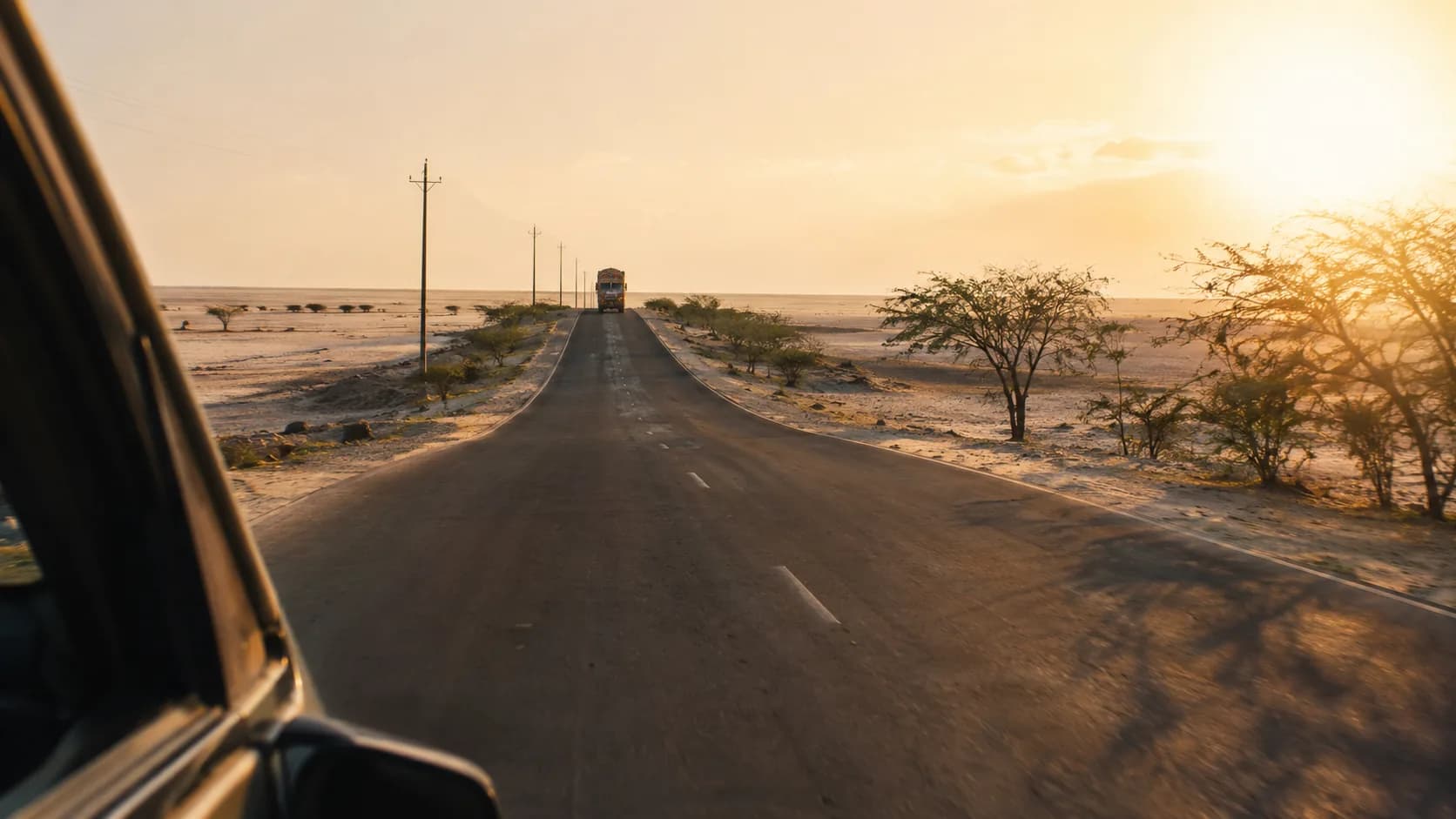
Dholavira sits on Khadir Bet, a rocky island in the Great Rann, accessible from the mainland via a road that crosses the salt marsh. The journey from Bhuj takes approximately two and a half to three hours — longer than the ninety-minute drive to Dhordo — and the road itself is part of the experience: crossing the Rann on a narrow causeway with salt desert on either side, the light playing across the flat expanse in ways that change every few minutes.
The Dholavira tent city is smaller and quieter than Dhordo. It accommodates fewer guests, operates a more modest cultural programme, and is primarily positioned as a companion experience for travellers who have come to see the UNESCO World Heritage archaeological site that shares its name.
The UNESCO Archaeological Site
This is what makes Dholavira unique — and what makes it one of the most compelling stops in India for travellers who care about history and civilisation.
The Dholavira archaeological site is one of the five largest cities of the Indus Valley Civilisation, dating back approximately 4,500 years. Excavated over decades by the Archaeological Survey of India, it reveals a sophisticated urban settlement with a layered citadel, water reservoirs, defensive walls, and a town plan that demonstrates extraordinary civic organisation for its era.
The site was granted UNESCO World Heritage status in 2021, joining a list that includes far better-known Indian monuments. But Dholavira remains, by the standards of Indian heritage tourism, remarkably uncrowded. You can walk the excavated ruins on a quiet weekday morning and feel the full weight of the place — the silence, the scale, the sheer improbability of this level of civilisation flourishing here four and a half millennia ago.
The famous Dholavira signboard — ten large stone symbols, the earliest example of a sign system in the Indian subcontinent, displayed at the entrance to the citadel — is one of the most remarkable artefacts you will encounter anywhere in India. Stand before it long enough and the question of what it says, and to whom it was addressed, becomes genuinely absorbing.
Combining the Rann and the Ruins
The Dholavira tent city makes it practical to combine the White Rann experience with the archaeological site in a single trip. Guests typically visit the ruins in the morning — when the light is good and the heat manageable — and spend the afternoon and evening at the tent city before heading out to the salt flat for the sunset or moonrise.
The salt desert visible from Khadir Bet has a different quality from the Rann viewpoint at Dhordo. It is less developed, less visited, and correspondingly more raw. The sense of being at the edge of a vast geological phenomenon — the largest salt desert in Asia — is more immediate here, less mediated by infrastructure.
The Cultural Programme at Dholavira
The Dholavira tent city does run a cultural programme, but it is more intimate than Dhordo's. Evenings here tend to feature smaller folk performances — often local Kutchi musicians and dancers — rather than the multi-act productions of the main tent city. For some travellers, this is preferable: the scale feels appropriate to the setting, and the performances have a quality of authenticity that is sometimes harder to sustain in a larger venue.
The artisan presence at Dholavira is also smaller, though the quality of work available is comparable. If you are interested in Kutchi craft, you will find it here — just in a quieter, more unhurried context.
Getting There: Practical Logistics
Dholavira is further from Bhuj than Dhordo — approximately 250 kilometres versus 90 kilometres — which means the journey is a meaningful undertaking. Self-drive in a sturdy vehicle is possible, but many guests prefer to arrange transport through their package provider. Our team can organise transfers from Bhuj or from Dhordo for travellers planning to visit both locations.
It is worth noting that Dholavira makes particular sense as part of a longer Kutch itinerary that also includes Dhordo. Several guests spend their first two nights at Dhordo — for the full festival experience — and then travel to Dholavira for a final night of quieter immersion before returning to Bhuj. This sequencing captures the best of both worlds.
The Verdict: Which Should You Choose?
Choose Dhordo if: you want the full Rann Utsav festival experience, you are visiting for the first time, you are travelling with children or a large group, or the cultural programme and artisan bazaar are central to your plans.
Choose Dholavira if: you are a heritage traveller with a genuine interest in the Indus Valley Civilisation, you prefer quieter and less crowded experiences, you want a different quality of salt desert encounter, or you are planning a longer Kutch trip and can afford to include both.
Choose both if: you have three or more nights available and want the depth that comes from experiencing Kutch's natural wonder and its ancient history in a single journey.
Both tent cities can be booked through our packages, which start at ₹6,300 for one night and two days, ₹12,600 for two nights and three days, and ₹18,900 for three nights and four days. For advice on itineraries that incorporate both locations, call our team at +91 92747 30220 — we are happy to help you build a trip that makes the most of everything this remarkable region has to offer.