WhatsAppCall Now
Season Guide

Diwali at Rann Utsav: Celebrating the Festival of Lights at White Rann (2026-27)

Diwali on the White Rann: A Festival of Lights Unlike Any Other

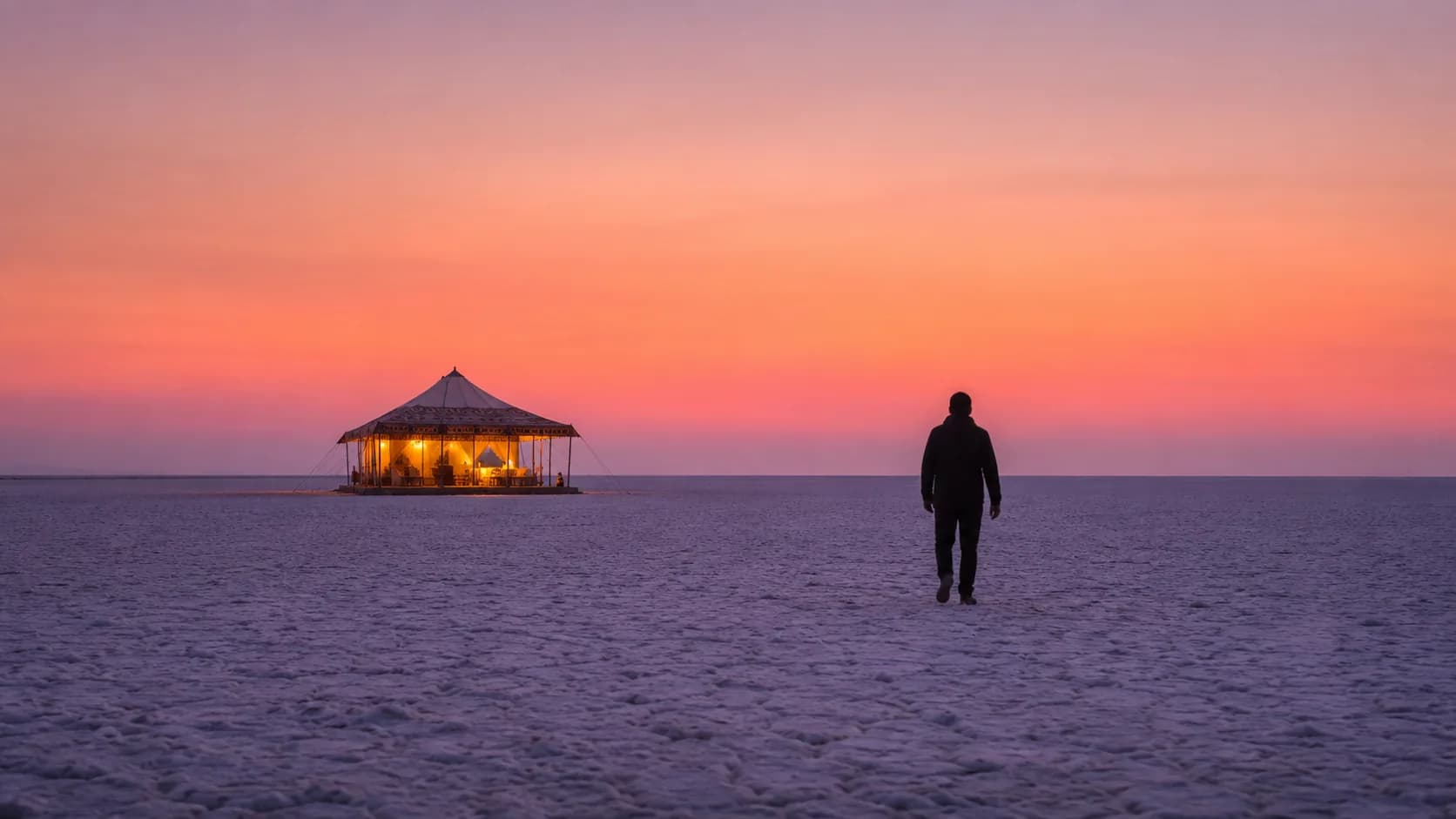
Every city in India celebrates Diwali — with fire, with light, with the particular energy of a nation that pauses collectively for five days of joy. But there are very few places in India where Diwali finds a natural backdrop as vast, as elemental, and as genuinely suited to the Festival of Lights as the White Rann of Kutch. When diyas flicker at the edge of an ancient salt desert, their light does not compete with streetlamps or high-rises. It simply extends into the dark, multiplied by the reflective surface of a billion crystallised salt molecules, until the boundary between the flame and the plain disappears.

Diwali 2026 falls on approximately October 20, making it one of the first major celebrations of the Rann Utsav season, which opens in late October or early November each year. The exact overlap of Diwali with the festival varies by year — some years, Diwali precedes the official tent city opening; in 2026-27, the timing is expected to align favourably, placing Diwali within the opening stretch of the festival when the energy is fresh and the crowds are smaller than in peak December.

This guide covers what Diwali at Rann Utsav actually looks like, what the October weather demands of you, and why celebrating the Festival of Lights in this particular corner of Gujarat offers something unavailable anywhere else.

The Tent City at Diwali: Illumination at Scale

The Dhordo tent city is, by design, a beautiful place at night. The Swiss tents are lit with warm lanterns; the pathways between them are lined with lamps; the central cultural area glows with the kind of ambient light that makes faces look kinder and conversations feel easier. On a normal festival evening, the tent city is enchanting. On Diwali, it becomes something more deliberate and more profound.

For Diwali, the tent city is illuminated with diyas — the small clay oil lamps that are the defining symbol of the festival. Hundreds of them line the paths, the entrances to tents, the edges of the performance areas, and the approach to the salt flat viewing point. The effect is cumulative: individually, each diya is a small warm flame; collectively, they create a continuous ribbon of light that makes the tent city feel both festive and sacred, in the way that traditional Diwali lighting always does.

The fireworks display on Diwali night at the White Rann is a particular draw. Fireworks over a salt desert are categorically different from fireworks over a city or a beachfront. There is nothing to obstruct the view in any direction; the flat horizon means you see the full arc of each burst from ignition to dissipation. The reflection of fireworks on the white salt surface — when conditions are right, particularly after light rain has left a thin film of water on the Rann — creates a doubling effect that is genuinely astonishing. The sky and the ground become a single field of light.

Diwali Sweets, Puja, and Traditional Programming

The Rann Utsav team organises a Diwali programme that reflects the festival's cultural significance within the Gujarati tradition. Gujarat has its own particular Diwali customs — this is Bestu Varas, the Gujarati New Year, which falls on the day after Diwali proper — and the tent city celebration incorporates both.

Traditional mithai — Diwali sweets — are served to guests, typically including the Kutchi and Gujarati specialties that form part of any regional Diwali celebration: mohanthal, sukhdi, ghari, and the particular fried sweets that vary from community to community across the region. The cultural programme on Diwali night features Garba — which in Gujarat is associated with Navratri but also appears during Diwali celebrations — and folk music that acknowledges the festival's significance.

The Lakshmi puja that is central to Diwali observance across India is conducted at the tent city, and guests who wish to participate in or observe the puja are welcome to do so. The connection between Lakshmi — the goddess of light and prosperity — and the vast, luminous landscape of the White Rann is something guests who have been here during Diwali frequently mention as the most powerful impression of their visit.

October Weather: Mild, Comfortable, and Underrated

One of the less-discussed advantages of visiting Rann Utsav during Diwali is the October weather. The festival's reputation is built partly on its December and January peak — when the full moons are most celebrated and the cultural programme is at its richest — and as a result, October tends to attract fewer visitors than it deserves.

In October, daytime temperatures at Dhordo range from eighteen to twenty-two degrees Celsius: genuinely comfortable, warm enough to require only light clothing during the day but not so hot that outdoor exploration becomes arduous. The landscape in October has a slightly different quality from December — the post-monsoon light is warmer in tone, the sky sometimes carries a trace of the atmospheric moisture that dissipates through November, and the salt flat itself may retain areas of seasonal water from the rains, creating the mirror-like surface that produces the most extraordinary reflections.

Nights in October are mild rather than cold — fourteen to sixteen degrees Celsius — which means the outdoor experience after dark is easier than in January. You do not need heavy winter layers; a light jacket or shawl is sufficient for the evening hours. This makes the Diwali night experience — standing outside watching fireworks, walking among the diyas, gathering around the bonfire — physically comfortable in a way that the deeper winter months are not.

The lower visitor numbers in October are a genuine advantage. The tent city feels spacious, the craft bazaar is browsable without crowds, and the cultural performances have a more intimate quality than in peak December. Guests who discover Rann Utsav in October often return in December for the full moon, but they frequently say that October was their favourite visit — quieter, warmer, and in its own way just as beautiful.

The Craft Bazaar in October: First Access of the Season

For travellers with a serious interest in Kutch craft, a Diwali visit has a specific advantage: October offers first access to the season's artisans before any of the pieces have been sold. The craft bazaar at Dhordo features artisans from communities across Kutch — Rabari embroiderers, Rogan painters, bandhani dyers, leather workers, copper bell makers — and their displays at the beginning of the season are at maximum depth, before the most desirable pieces are purchased by December and January visitors.

This is not a minor consideration. Kutch textile craft in particular — the hand-embroidered work of the Rabari and Ahir communities, featuring intricate mirror-work and silk thread — is produced slowly, in limited quantities, by a small number of artisans. A Diwali visit gives you access to the fullest selection of the season.

Packages and Pricing for Diwali at Rann Utsav

Accommodation at Dhordo tent city is available in the following packages, which apply across the season including the Diwali period:

The 1 Night 2 Days package is priced at ₹5,900 per person — ideal for guests based in Bhuj or elsewhere in Kutch who wish to experience the Diwali night celebrations without committing to a multi-day stay.

The 2 Night 3 Days package is priced at ₹11,500 per person, and offers enough time to experience the full Diwali programme across the main festival night and Bestu Varas the following day, along with the salt flat and cultural activities.

The 3 Night 4 Days package is priced at ₹16,000 per person, which is the recommended option for first-time visitors wanting a complete introduction to Rann Utsav alongside the Diwali celebration.

To confirm availability and make a booking, contact the Rann Utsav team on +91 70960 90666.

Why Diwali at Rann Utsav Deserves More Recognition

The Festival of Lights is, in its essence, about transforming darkness with small, determined flames. There is no landscape in India where this act feels more significant than the White Rann — a place of almost total darkness after sunset, of silence and scale that makes a single diya feel like an assertion of something important.

The December full moon and the New Year's Eve countdown may be the festival's headline events, but Diwali at Rann Utsav — quieter, warmer, and lit by a thousand earthen lamps on the edge of an ancient salt desert — is the experience that those who have had it tend to describe most carefully, reaching for language equal to what they saw.

To visit, to enquire, or to book for the Diwali period, reach the Rann Utsav team on +91 70960 90666, or visit the special dates page on this website.

FREQUENTLY ASKED QUESTIONS

Common Questions

When is Diwali 2026 at Rann Utsav?

Diwali 2026 falls on approximately October 20. The Rann Utsav season typically opens in late October or early November, and the 2026-27 festival is expected to include Diwali programming within its opening period. Contact +91 70960 90666 to confirm exact dates and availability.

What happens at the tent city during Diwali?

The tent city is illuminated with diyas, a fireworks display is held over the White Rann, traditional Diwali sweets are served, Lakshmi puja is conducted, and the cultural programme features extended folk music and Garba performances. The Bestu Varas (Gujarati New Year) celebrations on the day after Diwali are also part of the programme.

What is the weather like at Rann Utsav in October during Diwali?

October is pleasantly mild — daytime temperatures of eighteen to twenty-two degrees Celsius and nights at fourteen to sixteen degrees. A light jacket is sufficient for evenings. October has fewer visitors than December, making it a quieter and in many ways more relaxed time to experience the festival.

What packages are available for Diwali at Rann Utsav?

The 1 Night 2 Days package is ₹5,900 per person, the 2 Night 3 Days package is ₹11,500 per person, and the 3 Night 4 Days package is ₹16,000 per person. All include accommodation, meals, and access to the festival programme. Call +91 70960 90666 to book.

Is the craft bazaar open during Diwali at Rann Utsav?

Yes — and a Diwali visit offers first access to the season's artisans before any pieces have sold. Kutch craft including Rogan art, bandhani textiles, and Rabari embroidery is available at full depth at the start of the season.

USEFUL LINKS

Plan Your Visit

Diwali at Rann Utsav Special DatesView All Special DatesBook Your Stay

MORE FROM THE BLOG

More Guides

Planning

Rann Utsav 2026-27 Full Moon Dates Calendar — All 6 Nights Explained

Six full moon nights, one magical salt desert. Here is everything you need to know about booking the right night at Rann Utsav 2026-27.

8 min read
Read Article →
Planning

Rann Utsav vs Dholavira Tent City — Complete 2026 Comparison

White Rann moonscapes vs UNESCO heritage ruins — two extraordinary Gujarat experiences. Here is how to choose, and whether you can do both.

9 min read
Read Article →
Travel Tips

Rann Utsav Packing List 2026-27 — What to Bring & Leave

From thermal layers to camera gear to the documents you must not forget — the definitive packing guide for Rann Utsav 2026-27.

7 min read
Read Article →
READY TO BOOK?

Rann Utsav Packages from ₹5,900

1-night/2-day from ₹5,900 · 2-night/3-day from ₹11,500 · 3-night/4-day from ₹16,000. Call us or WhatsApp to book — we confirm within 2 hours.

View All Packages+91 70960 90666