The Festival That Grew from the Salt
There is a particular kind of ambition required to build a festival on a salt desert. Not a temporary stage in a park, not a fairground on a riverbank — but a full-scale, season-long celebration on one of the most extreme terrains on the Indian subcontinent. That ambition belongs to Gujarat Tourism, which launched Rann Utsav in 2005 with a vision that few at the time fully believed: that the barren, luminous immensity of the White Rann of Kutch could become the backdrop for one of India's most beloved cultural experiences.
Two decades later, Rann Utsav remains a major draw for Kutch. The published 2026–27 Dhordo Tent City stay season runs from 1 November to 7 March. This is the story of how the festival developed.
The Rann of Kutch: Understanding the Setting
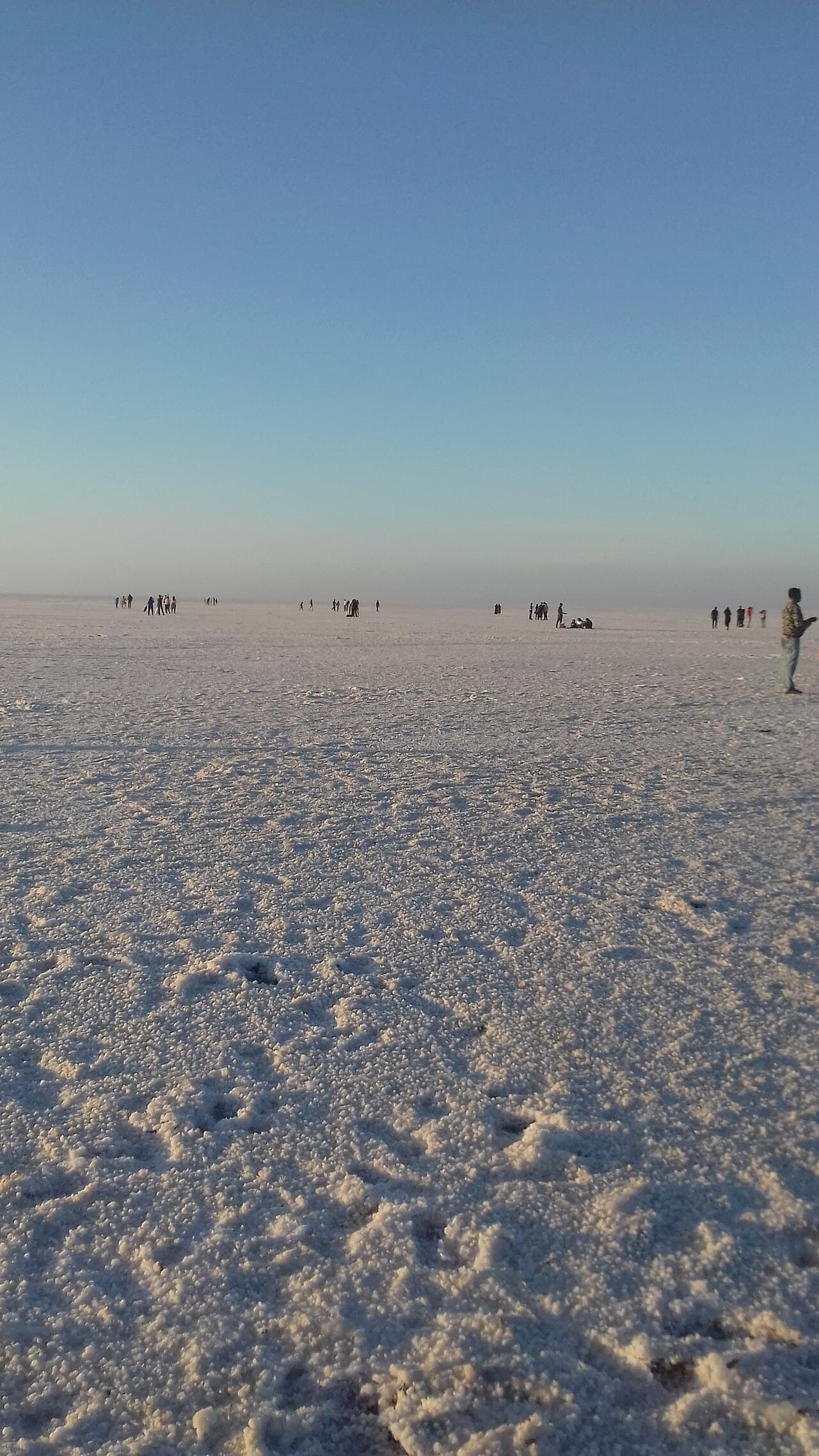
To understand Rann Utsav, you must first understand the landscape that inspired it. The Rann of Kutch is a seasonal salt marsh covering approximately 30,000 square kilometres in the north of Gujarat, making it one of the largest salt deserts in the world. The Great White Rann — the section most closely associated with the festival — encompasses around 7,500 square kilometres of salt-encrusted flatland. In the monsoon months, it floods with shallow brine water; when the water recedes in October, it leaves behind an immaculate white salt crust that stretches, unbroken, to the horizon.
The geological history of the Rann is extraordinary. Millennia ago, this was a navigable gulf of the Arabian Sea — ancient Harappan trade routes used it as a water passage. Over thousands of years, tectonic activity and siltation from the Indus and its tributaries converted it gradually from open sea to coastal wetland to the extraordinary salt flat it is today. The Harappan city of Dholavira, now a UNESCO World Heritage Site, sits on Khadir Island within the broader Rann, evidence of how densely populated and commercially active this landscape once was.
The Great Rann lies at an elevation of approximately 10 to 15 metres above sea level. Its surface is a mosaic of salt polygons — geometric cracking patterns produced by the cyclical flooding and drying of the brine — that give it a texture unlike any other landscape in India. On a full moon night, when the salt reflects both the moon above and the stars around it, the effect of standing on the Rann is genuinely disorienting: up and down lose their conventional meaning, and the world seems to become pure light.
Dhordo: The Village at the Heart of the Festival
The village of Dhordo, population fewer than a thousand people, sits at the southern edge of the Great White Rann approximately 85 kilometres north of Bhuj. It was here that Gujarat Tourism chose to establish the Tent City that forms the operational heart of Rann Utsav — and the choice was not accidental. Dhordo's community belongs to the Rabari and Meghwal communities, whose tradition of textile craft, embroidery, and pastoral life is among the most distinctive in all of South Asia.
The Rabari people are traditionally camel and cattle herders, and their craft — a form of embroidery incorporating tiny mirrors, dense stitching, and intricate geometric patterns — is instantly recognisable as Kutchi work. The Meghwal community are renowned leatherworkers and embroiderers, producing footwear, wall hangings, and garments of exceptional quality. By placing the Tent City at Dhordo, Gujarat Tourism ensured that the festival would draw directly on living craft traditions rather than importing performers from elsewhere. The artisans in the bazaar at Dhordo are, for the most part, from the village and its immediate surroundings.
This decision was foundational. It gave Rann Utsav a cultural authenticity that purely theatrical festivals cannot manufacture. When a visitor sits in a craft workshop at Dhordo learning a basic embroidery stitch, the woman teaching her has learned that stitch from her mother and grandmother; the patterns are at least five centuries old. That continuity is palpable, and it is the primary reason that visitors who come expecting a tourist spectacle leave feeling they have encountered something genuinely alive.
The Origins: How Rann Utsav Began in 2005
Rann Utsav was conceived in the aftermath of one of the most devastating natural disasters in Gujarat's modern history. The earthquake of January 26, 2001 — Republic Day — struck the Bhuj area with a magnitude of 7.7 and killed approximately 20,000 people, destroying vast swathes of Kutch's towns and villages. The rebuilding of Kutch was one of the most significant administrative projects in post-independence Gujarat, and in its wake, the state government under Chief Minister Narendra Modi turned its attention to economic regeneration.
Tourism was identified as a key driver. Kutch had always had visitors — the Rann had been a destination for adventurous travellers since the colonial period — but it was episodic, unorganised, and economically marginal. The idea that emerged in the early 2000s was to take the single most extraordinary feature of Kutch's landscape — the White Rann — and build a structured, accessible, culturally rich festival around it.
The first edition of Rann Utsav in 2005 was, by current standards, modest. A small tent city at Dhordo, a limited cultural programme, and facilities that were comfortable but not elaborate. The visitor numbers were in the thousands rather than the hundreds of thousands. But the response was immediate and enthusiastic. Journalists and travel writers who visited in those first seasons consistently described the experience in terms that echoed through subsequent coverage: the scale of the landscape, the quality of the night sky, the warmth of the Kutchi hospitality, and the folk performances were already forming the core identity of what Rann Utsav would become.
Growth Through the Seasons: 2005 to 2026
The Rann Utsav story from 2005 to the present is one of steady, sometimes dramatic expansion — in physical scale, in visitor numbers, in the sophistication of its cultural programme, and in the breadth of its national and international reach.
The tent city grew from a handful of basic tents to a layered accommodation offer that now spans Non-AC standard tents, air-conditioned Deluxe tents, and the Rajwadi tents — elaborately furnished tents whose interior detailing draws on the mirror-work and textile traditions of the Kutch region. By the 2015-16 season, the Tent City at Dhordo had become a genuine destination in its own right, with artisan bazaars, a food court serving regional specialities, an activities programme that runs from dawn to midnight, and a cultural stage that brings folk performers from across Gujarat and Rajasthan.
Visitor numbers grew in parallel. By the early 2010s, the Rann Utsav was drawing more than 100,000 visitors per season. By the mid-2010s, this had grown to over 300,000. In recent pre-pandemic seasons, the number exceeded 500,000 — a remarkable figure for a festival held in a remote desert location with limited road infrastructure. The growth required commensurate investment in access roads, sanitation, water supply, and waste management, all of which Gujarat Tourism addressed over successive seasons.
The festival also broadened its cultural programme significantly. Early editions focused primarily on Kutchi folk forms — the embroidery, the pastoral music of the Rabari community, the circular dance forms of the region. Over time, performers from Rajasthan (Kalbeliya dancers, Manganiyar musicians), Sufi traditions, and Bharatnatyam contexts were brought in, creating a programme that presents the best of western Indian folk and classical performance within the desert setting.
What Makes Rann Utsav Unique Among Indian Festivals
India has hundreds of festivals, and many of them are spectacular. The question worth asking is what distinguishes Rann Utsav from Pushkar Fair, the Jaisalmer Desert Festival, the Hornbill Festival in Nagaland, or the Ziro Festival in Arunachal Pradesh — other large-scale Indian festivals built around landscape and culture.
The landscape is central to the experience: the scale and luminosity of the White Rann make it distinctive. The site's 2026–27 calendar lists four full-moon travel windows within the published November-to-early-March Dhordo stay season. Kutchi craft traditions and cultural programmes add another reason to visit; check the provider's programme for your chosen dates.
The Kutchi Craft Tradition: A Living Heritage
The crafts of Kutch are among the most recognised in India, and Rann Utsav has played a significant role in bringing them to wider attention. Kutchi embroidery — particularly the styles practised by the Ahir, Rabari, and Mutwa communities — is characterised by the use of tiny mirrors (shisha work), dense geometric stitching, and a colour palette of crimson, ochre, and viridian that has remained remarkably consistent across centuries.
The making of these textiles is a community practice as much as an economic one. Garments, wall hangings, and domestic textiles are embroidered over months, passed between family members, and completed to mark significant occasions — weddings, births, the seasons. The Tent City bazaar at Dhordo provides a platform for artisans to reach buyers from across India and internationally, and the revenue has been economically transformative for many Dhordo families.
Other Kutchi craft traditions visible at the festival include block printing (the indigo and natural dye prints of the Khatri community), Rogan art (a rare form of painting using castor oil paint on fabric, practised by only a handful of families in Nirona village near Bhuj), lacquered wooden furniture, and Kutchi silver jewellery with its distinctive filigree work.
Rann Utsav in the 2026-27 Season: What the Festival Has Become
The 2026-27 Rann Utsav — the 22nd season of the festival — represents the mature form of what Gujarat Tourism envisioned in 2005. The Tent City at Dhordo now offers accommodation for several thousand guests per night across all tent categories. The cultural programme runs every evening from arrival to departure, with different performance forms on different nights to ensure that guests staying multiple nights encounter varied programming. The activities menu spans camel safaris, ATV rides, jeep excursions into the salt flat, traditional craft workshops, yoga at sunrise, and guided birdwatching — Kutch is one of India's premier bird habitats, home to the critically endangered Great Indian Bustard and seasonal flamingo flocks in the hundreds of thousands.
The festival's reputation has reached a point where international visitors now make up a meaningful portion of the guest list — travellers from Europe, the United States, Japan, and Southeast Asia who combine Rann Utsav with a broader Gujarat itinerary. For many of them, the White Rann is the primary reason they have come to India.
This is the legacy of what began in 2005: a festival that turned a salt desert into a stage, that celebrated a living craft tradition on the verge of decline and helped sustain it, and that gave hundreds of thousands of visitors an experience of India that they could not have anticipated and will never forget.