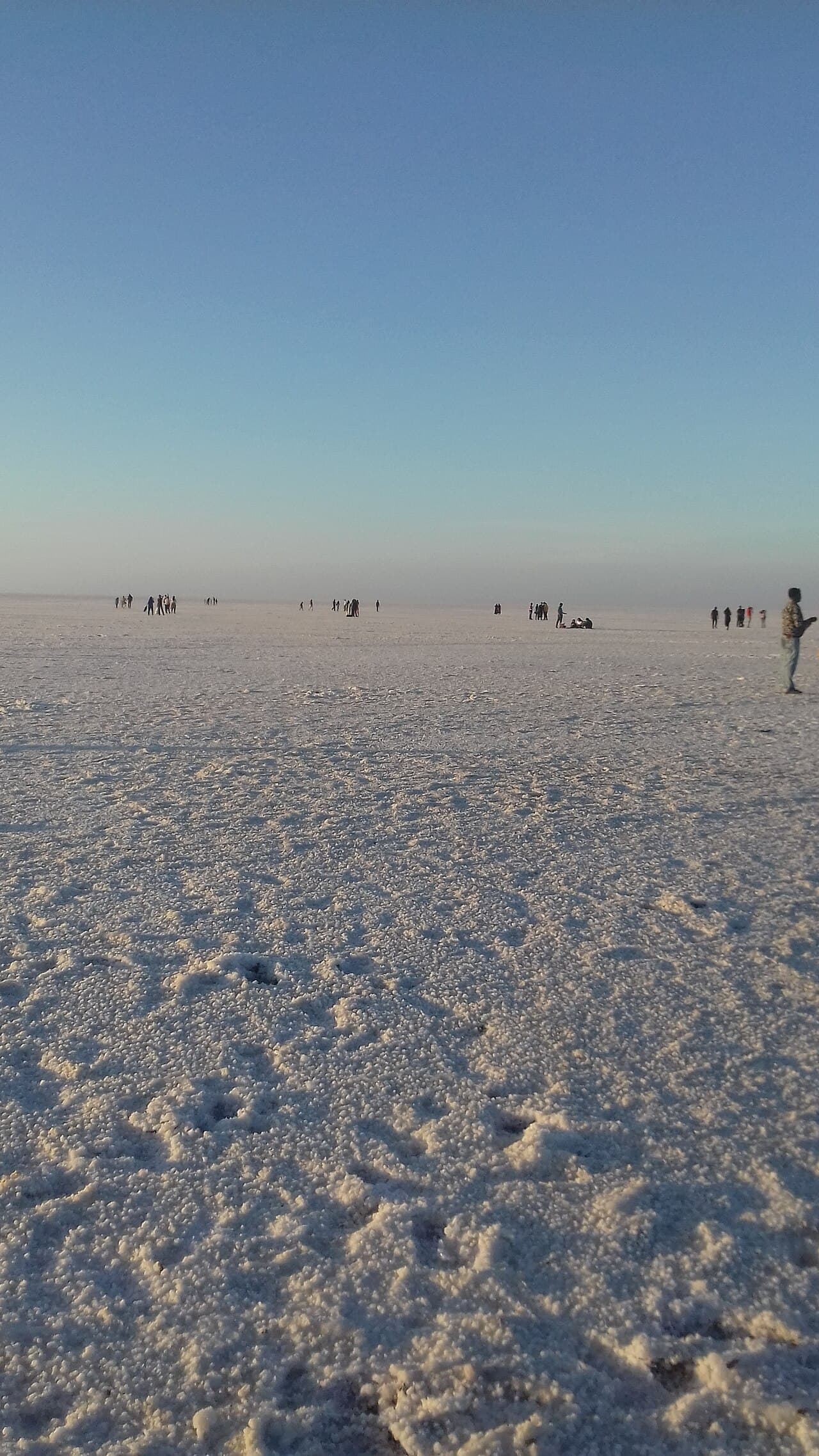
There is a moment, somewhere past Bhuj, when the road empties out and the horizon turns to salt. The land flattens, the colour drains to a blinding white, and you understand — in a way no photograph quite prepares you for — why Kutch has haunted the imagination of travellers, poets and pilgrims for centuries. This is the largest district in India, a vast expanse of desert, marsh, craft villages and ancient ruins wedged into the far west of Gujarat, and it rewards the curious like few places on earth.
If you are planning a trip and searching for the best places to visit in Kutch, you have found the only guide you will need. Below we walk you through 15 of the region's finest experiences — the legendary White Rann, the palaces and craft bazaars of Bhuj, the Harappan city of Dholavira, the beaches of Mandvi, flamingo-fringed wetlands and the artisan hamlets where Rogan painting and Ajrakh block-printing have survived for generations. We will also cover the practicalities: the best time to visit Kutch, how to reach it, where to stay, what to eat and how many days you actually need.
Why Kutch in Gujarat Belongs on Every Traveller's List
Kutch Gujarat is not a single attraction but an entire landscape of them. Bounded by the Arabian Sea to the south and the marshy frontier with Pakistan to the north, the district is defined by the Rann — a seasonal salt marsh that floods during the monsoon and dries into a dazzling white crust through winter. Around this otherworldly centrepiece cluster medieval port towns, embroidery villages whose stitches are recognised the world over, a UNESCO World Heritage archaeological site and some of the richest birdlife in the subcontinent.
What makes Kutch tourism so special is the sheer texture of it. In a single week you can stand on a cracked salt plain at sunrise, watch master craftsmen at work, sail past century-old wooden dhows being built by hand, and dine on Kutchi dabeli at a roadside stall. The 2026-27 season brings a fresh wave of visitors drawn by the famed Rann Utsav festival, and there has never been a better time to explore this corner of Gujarat.
The district is also a study in contrasts. The Banni grasslands of northern Kutch, once among Asia's finest pastures, support semi-nomadic herding communities whose embroidery and music carry the colour of the desert. Along the southern coast, old trading ports recall a time when Kutchi merchants sailed to Zanzibar and the Gulf and returned with carved doors, silver and stories. Every village seems to specialise in something — a stitch, a weave, a bell, a print — and it is this density of living culture, layered over a landscape of stark natural drama, that sets Kutch apart from anywhere else in India.
The White Rann of Kutch — The Great Rann
The image that draws most people to Kutch is the White Rann, also called the Great Rann of Kutch. After the monsoon waters recede, an immense bed of salt crystallises across the marsh, creating a seamless white plain that stretches to every horizon. By day it is blinding; at dusk it glows amber and rose; and under a full moon it becomes something close to magic — a silver mirror reflecting the night sky.
The most accessible viewpoint is near the village of Dhordo, roughly 80 kilometres from Bhuj, where a permit checkpoint marks the edge of the marsh. Walk out onto the salt, and the silence is total. Time your visit for the nights around the full moon for the most ethereal experience, and carry sunglasses regardless of when you go — the glare off the white surface is intense.
Rann Utsav & the Tent City at Dhordo
The White Rann would be remarkable on its own, but every winter it becomes the stage for the Rann Utsav, one of India's most celebrated cultural festivals. From the edge of the desert rises the Tent City at Dhordo — a sprawling, beautifully appointed encampment of luxury and premium tents, complete with dining halls, craft bazaars, cultural performances, spa services and adventure activities.
The festival typically runs from November through to March, and the 2026-27 season promises folk music under the stars, camel safaris, paramotoring, ATV rides and nightly performances of Kutchi dance and Sufi song. Staying at the Tent City puts you minutes from the salt flats, making it the simplest way to catch both sunset and moonrise over the Rann. Dhordo was recently recognised by the United Nations among the world's best tourism villages — a fitting honour for the gateway to this landscape.
> Ready to experience it for yourself? Explore our curated Rann Utsav Packages 2026-27 or call our travel desk at +91 92747 30220 to plan your stay.
Kalo Dungar — The Black Hill of Kutch
At 462 metres, Kalo Dungar, or Black Hill, is the highest point in Kutch and arguably its finest viewpoint. From the summit, the entire Great Rann unfurls beneath you — a panorama of white desert meeting blue sky that is especially spectacular at sunset. On a clear day you can see all the way to the international border.
The hilltop is home to a 400-year-old temple dedicated to Dattatreya, where a centuries-old ritual of feeding the local jackals continues to this day. Kalo Dungar is also famous for its so-called magnetic road, an optical illusion where vehicles in neutral appear to roll uphill. It makes a rewarding half-day trip from Dhordo or Bhuj.
Mandvi Beach & Vijay Vilas Palace
For a complete change of pace, head south to the seaside town of Mandvi, where the desert gives way to soft golden sand and the gentle surf of the Arabian Sea. Mandvi Beach is among the cleanest and most relaxed stretches of coast in Gujarat, with windmills turning along the shore, camel rides at the water's edge and glorious sunsets.
Overlooking the beach stands the Vijay Vilas Palace, a magnificent early-twentieth-century royal retreat built by the Maharao of Kutch. Its domes, carved jharokhas, stained glass and manicured gardens have made it a favourite film location, and the rooftop offers sweeping views over the sea and palace grounds. The private beach below, once reserved for royalty, is a serene spot to watch the day end.
Mandvi's Ancient Shipbuilding Yards
Few places in India offer a sight quite like Mandvi's shipbuilding yards. For more than 400 years, this port town has been crafting wooden dhows entirely by hand — and remarkably, the tradition continues. Walk along the Rukmavati river and you will find enormous wooden vessels rising from the sand, their hulls assembled plank by plank by skilled karigars using techniques passed down through generations.
These ships, some destined for buyers across the Gulf, are built without modern blueprints, guided instead by inherited knowledge and a practised eye. It is a living link to Kutch's seafaring past, when Mandvi was one of the busiest ports on the western coast of India.
Dholavira — Kutch's UNESCO Harappan City
Deep in the salt desert, on a remote island in the Great Rann, lie the excavated ruins of Dholavira — one of the largest and best-preserved cities of the ancient Indus Valley Civilisation, inscribed as a UNESCO World Heritage Site in 2021. Dating back roughly 4,500 years, the city reveals an astonishing level of urban sophistication: a sophisticated water-management system of reservoirs and channels, a fortified citadel, a stadium-like ceremonial ground and what may be the world's earliest signboard.
Wandering the sun-baked ruins, you sense the scale of an empire that flourished here when the Rann was navigable by sea. The on-site museum provides context, and the journey itself — along the dramatic Road to Heaven — is part of the experience. Dholavira lies about 250 kilometres from Bhuj, so it is best planned as an overnight trip or a long, early-start day. Recently developed visitor facilities, interpretation panels and a light-and-sound presentation have made the site far more accessible than it once was, and standing among these ancient walls at sunrise — with the white Rann shimmering in the distance — ranks among the most moving experiences in all of Kutch.
The Road to Heaven
The approach to Dholavira has earned a name of its own — the Road to Heaven. This newly built causeway, officially the Khadir Bet road, slices straight through the white salt marsh, water glinting on either side during the wetter months and an endless white plain stretching out in the dry season. Driving along it feels like floating across the surface of the desert, the road seemingly suspended between earth and sky.
It is one of the most photographed stretches of tarmac in India, and rightly so. Plan to drive it in the soft light of early morning or late afternoon, when the salt takes on a luminous glow.
Narayan Sarovar & Koteshwar
In the far west of Kutch, where the land meets the sea, lie two of Hinduism's most revered pilgrimage sites. Narayan Sarovar is counted among the five holy lakes, or panch-sarovar, mentioned in ancient scripture, and draws devotees seeking the merit of a sacred bath. The temple complex beside it, with its cluster of shikhara spires, is steeped in centuries of devotion.
A short distance away stands Koteshwar, a temple to Lord Shiva perched dramatically at the very edge of the Arabian Sea — the westernmost point of accessible India. Legend ties it to the demon king Ravana, and the spot where the Rann meets the ocean lends it a remote, elemental beauty. Together these two sites make a peaceful detour for those drawn to spiritual heritage.
Bhuj — The Cultural Heart of Kutch
No visit to Kutch is complete without time in Bhuj, the district's historic capital and the natural base for most itineraries. Though scarred by the 2001 earthquake, Bhuj has rebuilt itself with grace, and its restored palaces and bustling bazaars remain among the best places to visit in Kutch.
Aina Mahal
The Aina Mahal, or Palace of Mirrors, is an eighteenth-century jewel built by the celebrated craftsman Ramsinh Malam, who trained in Europe before returning to dazzle the Kutchi court. Its hall of mirrors, Venetian glass, marble floors and an ingenious fountain pavilion reflect a worldly, eclectic taste rare for its time.
Prag Mahal
Adjacent stands the Prag Mahal, a striking nineteenth-century palace built in Italian Gothic style, complete with Corinthian pillars and a towering clock tower. Climb the 45-metre bell tower for a panoramic view across the rooftops of Bhuj. The grand Durbar Hall, though weathered, still conveys the splendour of the Kutchi royals.
Bhujodi Craft Village
Just outside the city lies Bhujodi, a weaving village where generations of artisans practise the intricate art of Kutchi shawl and textile weaving. Here you can watch craftsmen at their pit looms, browse hand-woven shawls and stoles, and buy directly from the makers. It is the ideal introduction to the region's extraordinary handicraft traditions.
Kutchi Handicraft Villages — Nirona & Ajrakhpur
Kutch is, above all, a land of artisans, and a tour of its craft villages is among the most rewarding things to do in Kutch.
Nirona & the Art of Rogan
The village of Nirona is home to one of the rarest art forms in the world — Rogan painting, practised today by only a handful of families. Using a thick paste of boiled castor oil and natural pigments, the artist trails fine threads of colour onto cloth with a metal stylus, never touching the fabric directly, to create intricate, mirror-image patterns. A Rogan artwork from Nirona was famously gifted by the Indian Prime Minister to a foreign head of state, bringing global recognition to this fragile tradition. Nirona is also known for its copper-bell makers and lacquer-work craftsmen.
Ajrakhpur & Block-Printing
The village of Ajrakhpur, founded by master printers after the 2001 earthquake, is the home of Ajrakh, the celebrated geometric block-printing tradition. Using natural dyes — indigo, madder, pomegranate — and a labour-intensive process of repeated printing and washing, the artisans produce deeply saturated, double-sided fabrics of remarkable beauty. Watching the rhythmic stamping of carved wooden blocks is mesmerising, and the workshops welcome visitors keen to learn and buy.
Beyond these, villages such as Hodka, Dhordo and Khavda are renowned for their distinctive embroidery, leatherwork and mud-mirror Bhunga architecture.
The Wild Ass Sanctuary & the Little Rann of Kutch
To the south-east lies the Little Rann of Kutch, a different but equally captivating face of the desert. This is the only home of the endangered Indian wild ass, or khur, and the Wild Ass Sanctuary here protects herds of these elegant, fast-running animals. A jeep safari across the cracked saline plains may also reveal nilgai, chinkara, desert foxes and a wealth of birdlife.
The Little Rann is also famous for its traditional salt farmers, the Agariyas, who harvest salt from the marsh in conditions of extraordinary hardship. For wildlife lovers, this is an unmissable side of Kutch tourism.
Chhari Dhand Wetland & the Flamingos
Birdwatchers will want to make time for Chhari Dhand, a seasonal wetland and conservation reserve on the edge of the Banni grasslands. After a good monsoon, this shallow lake becomes a haven for tens of thousands of migratory birds — pelicans, cranes, ducks and, most spectacularly, great flocks of flamingos that wade through the water in shimmering pink.
More than 250 species have been recorded here, including raptors and rare wintering visitors. The best time for birding is from December through February, when the wetland is full and the migrants are at their peak.
Best Time to Visit Kutch
The best time to visit Kutch is during the cooler months from November to February, when daytime temperatures are pleasant and the White Rann is at its driest and most dazzling. This window also coincides with the Rann Utsav festival and peak flamingo season, making it ideal for first-time visitors.
October and March are shoulder months — still comfortable, with fewer crowds. The summer months from April to June are punishingly hot and best avoided, while the monsoon from July to September floods the Rann, closing the salt desert to visitors but turning the grasslands lush and green.
How to Reach Kutch
Reaching Kutch is straightforward, with Bhuj serving as the main gateway:
- By air: Bhuj Airport is connected to Mumbai and Ahmedabad by daily flights. From Bhuj, Dhordo and the White Rann are about a 90-minute drive.
- By train: Bhuj railway station is linked to Ahmedabad, Mumbai and Delhi. The overnight trains from Ahmedabad are a comfortable, scenic option.
- By road: Bhuj is well connected by highway to Ahmedabad (around 330 kilometres, six to seven hours) and to other Gujarat cities. Self-drive and chauffeured cabs are popular ways to explore the district's far-flung sights.
Do note that visiting the White Rann near Dhordo requires a permit, easily obtained at the checkpoint or arranged in advance as part of a package.
Where to Stay in Kutch
Accommodation in Kutch ranges from the spectacular to the simple. The Tent City at Dhordo is the obvious choice during festival season, offering luxury and premium tents right beside the salt flats. Bhuj has a good spread of heritage stays, business hotels and guesthouses, making it a practical base for day trips. Mandvi offers beach resorts for those wanting sea and sand, while village homestays in Hodka and the Banni region provide an immersive, community-run experience in traditional Bhunga huts.
What to Eat — Kutchi Food
Kutchi cuisine is hearty, distinctive and largely vegetarian. Do not leave without trying dabeli, the region's iconic spiced potato-filled bun topped with pomegranate and roasted peanuts. Other must-tries include Kutchi dal-pakwan, the crisp flatbread bhakri served with garlic chutney, and the indulgent winter sweet adadiya. The traditional Kutchi thali, served on festive occasions, brings together a generous spread of curries, kadhi, rotis and sweets. At the Tent City, regional specialities are served fresh each evening.
How Many Days Do You Need in Kutch?
For a satisfying first trip, plan on four to five days in Kutch. A two-day stay around Dhordo covers the White Rann, Kalo Dungar and the nearby craft villages; a day in Bhuj takes in the palaces and Bhujodi; and a further day or two allows for Mandvi's beach and shipyards, plus an excursion to Dholavira via the Road to Heaven. Travellers with a week to spare can add the Little Rann wildlife safari, Narayan Sarovar and deeper village explorations. If your time is tight, even a focused three-day Rann Utsav trip delivers the essence of the region.
Plan Your Kutch Journey for the 2026-27 Season
From the silver silence of the White Rann to the carved mirrors of the Aina Mahal, from castor-oil paintings in Nirona to flamingos rising over Chhari Dhand, Kutch is a district that refuses to be seen in a single glance. It is desert and sea, ruin and craft, festival and pilgrimage — and every one of the best places to visit in Kutch tells a story older and richer than you expect. As the 2026-27 season opens, there has never been a finer time to discover this luminous corner of Gujarat for yourself.
> Let us handle the details. Explore our Rann Utsav Packages 2026-27, secure your stay through our Dhordo Tent City Booking, or call +91 92747 30220 to start planning your Kutch adventure today.