Solo Women at Rann Utsav: An Honest Assessment
The question arrives in our inbox with some regularity: is Rann Utsav safe for a woman travelling alone? It is a fair and important question, and it deserves a direct, honest answer rather than vague reassurances. The short answer is yes — Rann Utsav and the broader Kutch region are genuinely among the safer festival and travel experiences available to solo women in India. The longer answer involves understanding why that is the case, what practical precautions still make sense, and how to get the most from your visit with confidence.
This guide is written for women who are seriously considering a solo trip to Rann Utsav and want real information rather than either unfounded optimism or excessive alarm. It is based on the experience of many solo women visitors who have attended the festival across multiple seasons, as well as the ground realities of the tent city environment and Gujarat more broadly.
Why Gujarat Is a Particularly Safe State for Women Travellers
Gujarat has consistently ranked among India's safer states for women in government safety indices and traveller surveys. It is a largely dry state — alcohol is prohibited — which meaningfully affects the atmosphere at public gatherings and tourist destinations. The absence of alcohol changes the dynamic at the tent city in ways that solo women visitors consistently notice and appreciate: evenings are calm, behaviour among other guests is overwhelmingly respectful, and there is none of the rowdiness that can make other festival environments uncomfortable.
The local culture of Kutch is conservative in the best sense — hospitable, community-minded, and oriented around family and craft. The communities around Dhordo — the artisans, the village families, the folk performers — have been welcoming visitors for many years and regard tourism as something to be valued and protected. Aggressive behaviour towards visitors, and particularly towards solo women, is rare and genuinely unwelcome in the local context.
The Tent City Environment Is Structured and Well-Staffed
The Rann Utsav tent city at Dhordo is not a loose, open-access festival ground. It is a managed, gated accommodation campus with security present at its perimeter and throughout its common areas. Check-in requires documentation — the permit and identity verification process that applies to all visitors — which means the guest population is known and accountable. Staff are present around the clock, and the management team is accessible if any concern arises.
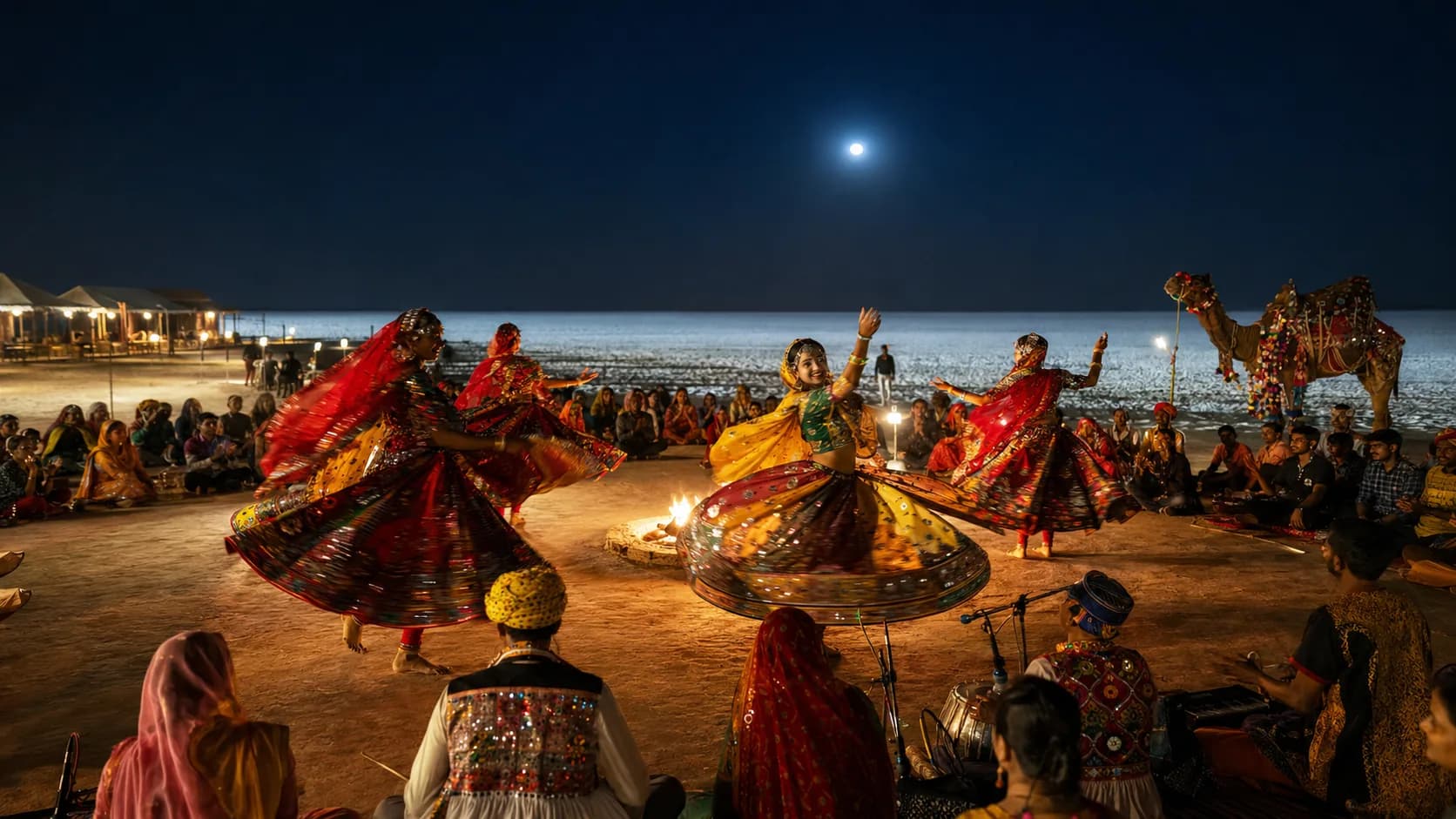
The majority of guests at any given time are families — couples with children, multi-generational groups, friends travelling together. The festival atmosphere is warm and inclusive rather than raucous. Solo women visitors frequently comment that they felt comfortable and even welcomed by other guests, and that the environment was far more like a well-run resort than an uncontrolled festival ground.
Accommodation in the tent city is in individual tents or rooms with secure fastenings, not shared dormitory-style spaces. Women booking solo receive their own accommodation unit, and the layout of the tent city means common areas are well-lit and staffed after dark. If you have specific concerns about your accommodation allocation, call +91 92747 30220 when booking and discuss your requirements — the team is accustomed to accommodating solo travellers.
Practical Safety Tips That Still Make Good Sense
Acknowledging that Rann Utsav is a safe environment does not mean abandoning ordinary travel common sense. The following practices are simply good travel behaviour regardless of destination.
Travel to Dhordo during daylight hours. The road from Bhuj to Dhordo is straightforward in daylight but can feel isolated and unfamiliar after dark, particularly for a first-time visitor. Book transportation that gets you to the tent city by four in the afternoon at the latest. If you are arriving by train to Bhuj, plan your journey so that onward travel to Dhordo happens the following morning rather than late at night.
Share your itinerary with someone at home before you leave. This is a universal solo travel practice — tell a friend or family member your full schedule, the name and contact number of the tent city (which is +91 92747 30220), your expected arrival and departure dates, and how they can reach you. Mobile connectivity at the White Rann is limited, so set expectations that you may be unreachable at times during your stay.
Stay at the official Rann Utsav tent city rather than ad hoc private accommodation in the area. The tent city's managed environment, security presence, and professional staff make it significantly safer and more comfortable than unregulated guesthouses in nearby villages. The cost difference is not large, particularly at the entry-level packages from ₹6,300 per person for one night and two days, and the difference in experience and peace of mind is considerable.
Getting Around: The White Rann and the Bazaar
The two main activity zones at Rann Utsav — the White Rann viewing area and the cultural bazaar within the tent city — are both safe for solo women. The viewing area is visited in organised groups from the tent city, with staff accompanying visitors, and the bazaar is a busy, well-lit, well-populated commercial space. Solo women routinely visit both areas without difficulty.
Where common sense applies is in venturing beyond the organised zones. The salt flat is large, and wandering far from the main viewing area alone and after dark is not advisable simply because the terrain is disorienting and mobile connectivity for navigation is unreliable. Sunrise visits, which are particularly beautiful and highly recommended, are best arranged as part of a small group from the tent city or with a staff escort. Ask the tent city team to organise this when you arrive — it is a routine request.
In the bazaar, you may be approached by eager vendors, which is true everywhere in India and is simply part of the shopping experience. A confident, direct manner and a willingness to walk on if a vendor is persistent works perfectly well. The artisans at Rann Utsav are generally respectful and genuinely proud of their work — interactions tend to be pleasant rather than pressured.
Connecting with Other Solo Travellers
One of the underrated aspects of the Rann Utsav tent city as a destination for solo women is the ease with which you can fall into the company of other travellers. The common dining areas, the evening cultural programmes, and the organised excursions to the White Rann all create natural points of connection. Solo travellers — women and men alike — frequently find themselves joining couples or families for the evening performance or the sunrise visit, and the open, inclusive atmosphere of the tent city makes this easy and natural.
If you would prefer to be part of an organised group from the outset, there are travel companies that run curated group trips to Rann Utsav specifically aimed at solo travellers. These trips combine the benefits of a managed group with the freedom to spend time independently during the day. They tend to book up well in advance, so research and book early if this appeals to you.
Health and Wellbeing Considerations
The desert environment at Rann Utsav presents a few health considerations that apply to all visitors but are worth noting. The cold nights from December to February require proper warm clothing — thermals, a substantial jacket, hat, and gloves are not optional. The salt flat in strong sunlight requires sunscreen, sunglasses, and a hat for daytime visits. The water at the tent city is safe to drink, but carrying a personal water bottle is a good habit.
The nearest hospital with reasonable facilities is in Bhuj, roughly 90 kilometres from Dhordo. The tent city has basic first aid on site, but it is not a medical facility. If you have any ongoing health conditions that require medication or regular monitoring, ensure you carry everything you need with you rather than expecting to find it locally. Travel insurance that covers medical evacuation from a remote area is a sensible precaution for any solo traveller, not just at Rann Utsav.
What Solo Women Visitors Consistently Say
Across many seasons of Rann Utsav, the consistent feedback from solo women visitors is that the experience exceeded their expectations — not just in terms of the landscape and the cultural richness, but in terms of the atmosphere and the ease of being a woman alone. Many report that the tent city environment felt more comfortable than they expected, that staff were helpful and attentive without being intrusive, and that the visitor community was friendly and welcoming.
Several solo women visitors mention that Rann Utsav prompted their first experience of truly solo travel in India, and that its managed, structured environment gave them the confidence to travel more independently afterwards. The festival's combination of a safe physical environment, a culturally rich programme, and a visitor community that tends towards families and serious travellers rather than rowdy groups makes it an unusually good entry point for solo travel in India.
Booking and Preparation
If you are ready to plan your solo visit to Rann Utsav, call The Tourism Experts LLP booking-assistance team at +91 92747 30220 to request availability for your preferred dates. Let them know you are travelling solo and discuss any specific requirements around accommodation placement or accessibility. Starting prices depend on the selected stay, occupancy and dates and will be confirmed in a written quote before payment.
Book your transport from Bhuj in advance rather than relying on finding a taxi on arrival. Arrange to arrive at the tent city during daylight hours. Download offline maps for the Kutch region before leaving Bhuj, where you should also withdraw cash, as ATMs are not available near Dhordo. And beyond all the practical preparation — go with an open mind and the expectation that the Rann of Kutch is going to show you something you were not expecting.