What First-Timers Wish They Had Known Before Arriving at Rann Utsav
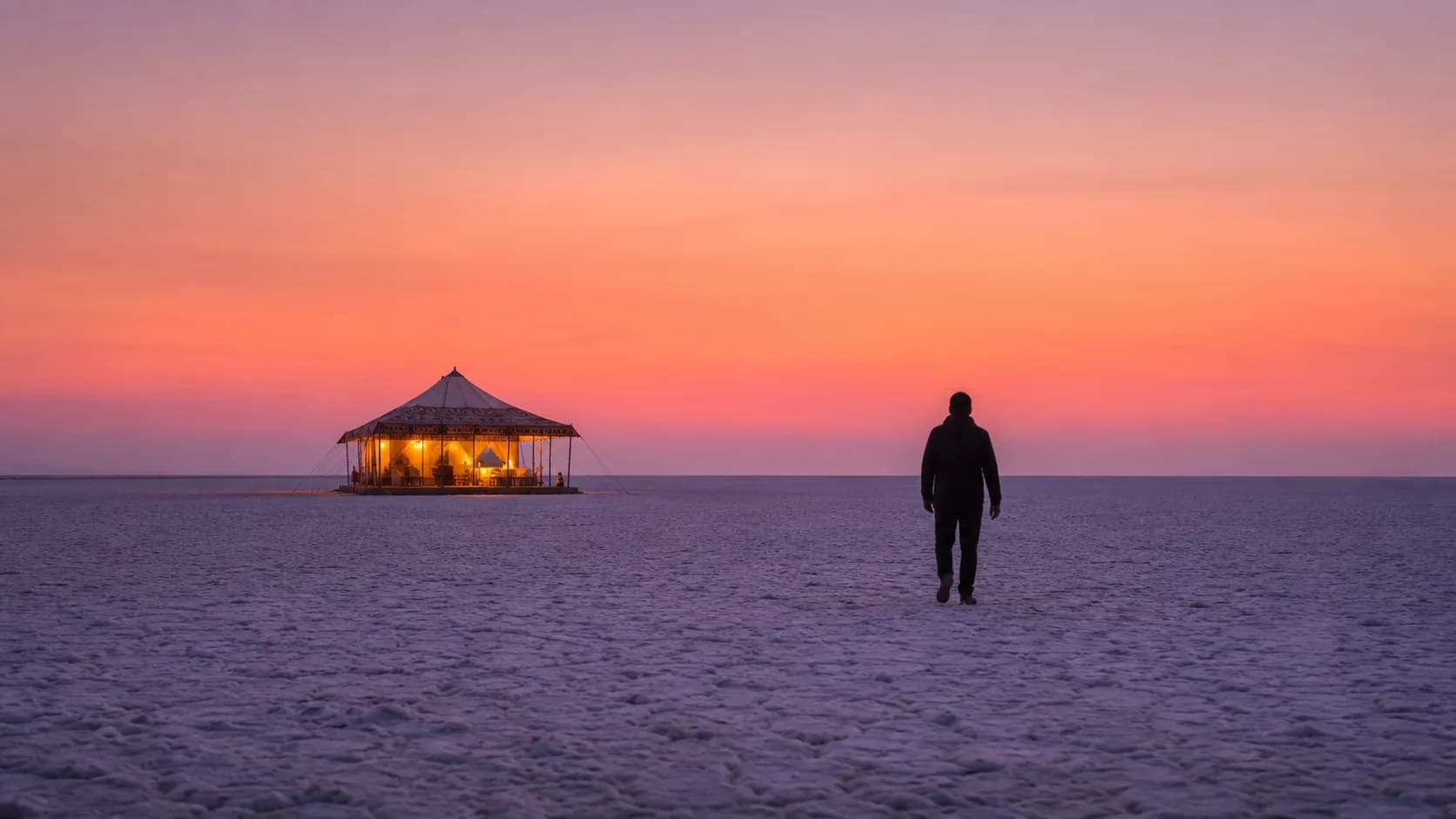
There is something about the Rann of Kutch that defies easy description. The salt stretches to every horizon, the sky performs a slow theatre of colour at dusk, and by the time the full moon rises above the white desert, most visitors quietly concede that no photograph they took does it justice. First-time visitors arrive expecting a beautiful landscape festival and leave with something they did not bargain for — a sense of scale, of silence, and of India at its most ancient and elemental.
But arriving unprepared is a different experience entirely. The Rann is remote, the nights are genuinely cold between October and February, and the logistics of reaching Dhordo are more intricate than most travel blogs admit. These fifteen tips are the things veteran Rann Utsav travellers quietly tell their friends before a first visit — the kind of guidance that does not appear on the official poster.
Book Early — The Good Accommodation Sells Out Months in Advance
Rann Utsav is one of the most popular cultural festivals in India, drawing visitors from across the country and increasingly from abroad. The tent city at Dhordo is not unlimited in size, and the premium Swiss tents — with attached bathrooms, proper beds, and heating — are booked up long before the season begins in November. If you are travelling during a long weekend, a national holiday, or especially around the full moon, you should be booking three to four months ahead. Packages start from ₹6,300 per person for one night and two days, rising to ₹12,600 for two nights and three days, and ₹18,900 for three nights and four days — the longer you stay, the more fully you experience the place. Call +91 92747 30220 to check availability and secure your dates before they disappear.
You Need a Permit — and It Takes Time to Arrange
The White Rann lies within a protected and sensitive border zone, which means all visitors require an entry permit. This is not a formality that can be sorted at the gate. The permit is arranged through the tent city operators or through official channels in advance, and it requires certain identity documents. If you are a foreign national, the process involves additional paperwork. Do not assume this will sort itself on arrival — it will not, and you will be turned away at the checkpoint without a valid permit. When booking through the official Rann Utsav tent city, the permit process is handled as part of the package, but confirm this explicitly when you call.
Arrive Before Four in the Afternoon
The drive from Bhuj to Dhordo takes roughly 85 kilometres and, on a clear road in daylight, around an hour and a half to two hours. The problem is that the roads beyond the main highway are narrow, poorly lit, and unfamiliar territory after dark. More practically, you want to arrive before sunset because the check-in process, the permit verification, and the orientation at the tent city all take time — and you do not want to be sorting these things after nightfall when you could be watching the desert change colour. Arriving by four in the afternoon gives you time to settle in, freshen up, and reach the White Rann viewing area before dusk. The light in the hour before sunset is the finest the desert offers.
Pack for a Cold Desert, Not a Warm Beach
First-time visitors from Mumbai, Bangalore, or Chennai frequently underpack for warmth. Gujarat feels like a warm state, and Kutch in October looks perfectly mild on a weather app. What the app does not capture is the desert cold that descends after sundown, particularly between December and February. Temperatures routinely drop to five or six degrees Celsius on winter nights, and the wind across the open salt flat has a penetrating quality that light jackets cannot counter. Pack thermals, a proper winter jacket, a warm hat, and gloves. Woollen socks are not excessive. You will be spending time outdoors at night, under the moon, on a flat white expanse with no windbreak for miles — dress accordingly.
The Bazaar and Cultural Programme Have Earlier Timings Than You Expect
The Rann Utsav cultural bazaar — with its Kutchi handicrafts, textiles, embroidery, and local food — typically closes earlier than most visitors anticipate, often by eight or nine in the evening. The cultural programmes, including folk music and dance performances, begin at a fixed time each evening and do not wait for latecomers. If you are planning to shop, negotiate with artisans, and then catch the evening performance, structure your afternoon accordingly. Visitors who spend too long at the White Rann viewing area and return to the tent city late sometimes find the bazaar winding down and the best stalls already packed away.
The Full Moon Experience Is Worth the Premium
If there is one thing to prioritise when choosing your dates, it is the full moon. On a clear full moon night at the White Rann, the salt reflects the moonlight so completely that the desert appears to glow from within. Shadows fall across the white surface, the horizon blurs between earth and sky, and the effect is genuinely otherworldly. Full moon dates during the Rann Utsav season attract premium pricing and sell out very quickly — but they are worth every rupee. Check the full moon calendar for the 2026-27 season and book those specific dates well in advance if at all possible. The experience on an ordinary night is beautiful; on a full moon night, it is transformative.
Download Your Maps and Entertainment Before You Leave Bhuj
Mobile connectivity at the White Rann and around Dhordo is weak to non-existent. Jio, Airtel, and Vi all struggle in this area, and while the tent city has WiFi, it is shared across many guests and unreliable for anything data-intensive. Download Google Maps or Maps.me for the Kutch region offline before you leave Bhuj. Download any playlists, podcasts, or films you want for the evenings. If you are travelling with children, make sure tablets and devices are fully loaded with entertainment that does not require an internet connection. Do not count on being able to use Google to answer questions once you are in the desert.
Withdraw Cash in Bhuj — ATMs Are Not Nearby
The bazaar at Rann Utsav has a wonderful mix of artisan stalls, and most of the craftspeople and food vendors work in cash. There is no ATM at the tent city or in Dhordo village, and card readers at small stalls are rare. Bhuj has multiple ATMs from major banks clustered in the city centre, and this is where you should withdraw what you need for your entire stay. A good rule of thumb is to carry more than you think you will spend — Kutchi embroidery, block prints, and silver jewellery have a way of proving irresistible, and running out of cash is frustrating when you are holding a piece of work that took an artisan three months to make.
Your Shoes Will Get Salty — Wear the Right Ones
Walking on the salt flat sounds simple, but the surface is not uniform. In places it is firm and almost crystalline underfoot; in others, particularly after recent rainfall or near the water's edge, it can be soft, crumbly, and wet. Closed shoes with a reasonable grip are far more practical than sandals or canvas sneakers. The salt is also corrosive — it will mark and damage leather and delicate fabrics. Wear shoes you are comfortable getting dusty and salty, and rinse them thoroughly when you return. Some visitors bring a spare pair of sandals for the return walk when they know their primary shoes are going to take a beating.
The Desert Looks Closest at Sunrise, Not Sunset
Sunset at the White Rann is rightly celebrated — the sky turns through amber, rose, and violet, and the salt below mirrors every shade. But the desert at sunrise is, for many who have seen both, even more remarkable. In the early morning, before other visitors arrive, the salt flat is absolutely silent, the light is soft and horizontal, and the colours are delicate rather than dramatic. If you are staying for two or more nights, set your alarm for at least one morning and reach the viewing area before dawn. The landscape that greets you in the first hour of daylight is one that most visitors, sleeping in after the evening's cultural programme, never see.
Respect the Local Community and Their Craftsmanship
The villages around Dhordo — Hodka, Khavda, and Dhordo itself — are home to communities who have maintained extraordinary craft traditions across generations. The embroidery, mirror work, and weaving you see in the bazaar are not mass-produced souvenirs. They represent months of skilled handwork. When you are shopping, recognise that artisans who are willing to explain their craft and demonstrate their techniques deserve your time, respect, and honest payment. Aggressive bargaining on items that are already fairly priced is disrespectful to the maker. The best way to bring something meaningful home from Rann Utsav is to buy less and buy well — one truly fine piece rather than a bag of cheap imitations.
Children Are Very Welcome — But Plan Their Schedule Carefully
Rann Utsav is genuinely wonderful for families with children, but the logistics need thought. The camel rides, the ATV rides across the desert, the folk puppet shows, and the energy of the bazaar are all thrilling for young visitors. The cold nights, however, require proper preparation, and children often tire earlier than adults anticipate. Plan their schedule around the afternoon and early evening activities, ensure they have warm layers, and do not rely on the desert excitement to override the basic need for sleep. Families who plan well report that children remember Rann Utsav for years — it is exactly the kind of vivid, sensory experience that lodges permanently in young imaginations.
Senior Citizens Should Confirm Accessibility Before Booking
The tent city is generally well organised and relatively accessible, but the White Rann itself involves walking on an uneven surface across a fair distance from the viewing area. For elderly visitors or those with mobility concerns, this should be discussed when booking. Some arrangements can be made for transport closer to the salt flat, and the tent city team is genuinely helpful when needs are communicated in advance. Call +91 92747 30220 and explain any accessibility requirements — it is far better to clarify this before arrival than to discover limitations when you are already there.
The Journey Is Part of the Experience — Do Not Rush Through Bhuj
Many first-time visitors treat Bhuj purely as a transit point on the way to Rann Utsav, and in doing so they miss a remarkable city. Bhuj is the cultural capital of Kutch, home to the Aina Mahal, the Prag Mahal, the Kutch Museum, and a bazaar district that has been trading in textiles and crafts for centuries. If your schedule allows even half a day in Bhuj before continuing to Dhordo, take it. The context it provides — the history of Kutch, the 2001 earthquake and the city's extraordinary rebuilding, the living craft traditions — makes everything you subsequently see at Rann Utsav more resonant and meaningful.
One Night Is Never Enough
This is perhaps the most consistent thing that experienced Rann Utsav visitors say about first-timers: one night is not enough. The rhythm of the tent city is slow and expansive. The desert reveals itself differently at different times of day and night. The bazaar takes time to explore properly. The cultural performances, the local food, the early morning silence — none of this can be absorbed in a single overnight stay. If your budget and schedule allow, book two nights and three days, or ideally the full three nights and four days package. The guests who linger are the ones who leave genuinely satisfied; those who rush through often find themselves booking a return trip before they are even home.
One Final Truth: It Will Stay With You
There is a quality to Rann Utsav that is genuinely difficult to articulate to someone who has not been. Part landscape, part festival, part cultural immersion — it sits outside the ordinary categories of Indian travel. First-time visitors frequently report that they thought about the White Rann for weeks after returning home, replaying the moonlit salt flat or the sound of a Kutchi folk singer in the open air. Go prepared, go patient, and go with enough time to let the place work on you. The Rann of Kutch is not in a hurry, and neither should you be.