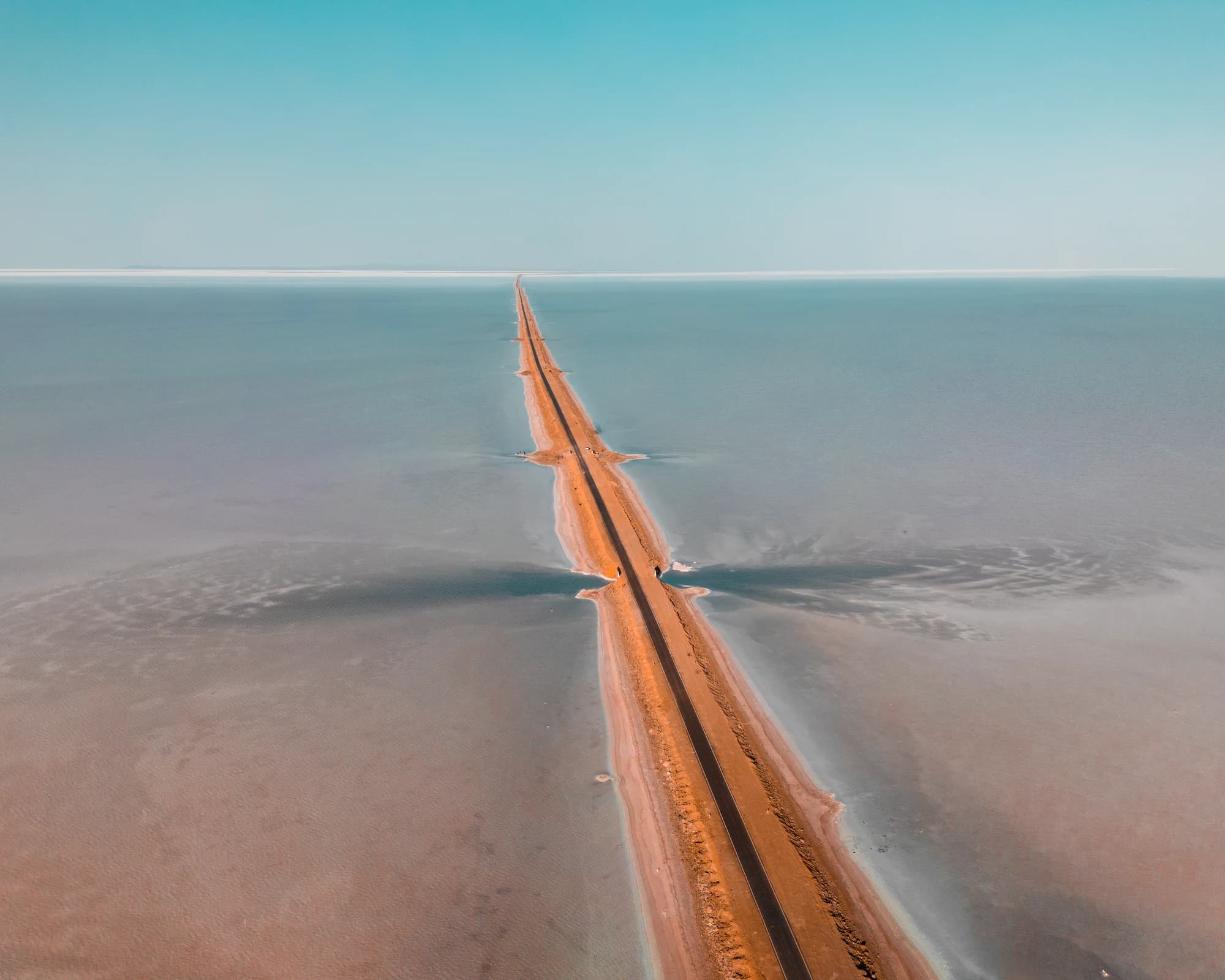
There are drives, and then there is the road to heaven Kutch. For a few unbroken kilometres, the tarmac runs dead straight while the White Rann — the great salt desert of Gujarat — spreads out flat and luminous on either side of your wheels. There is no village, no tree, no hoarding to interrupt the view. Just a thin grey ribbon of road, the blinding white of the salt, and a sky so wide it seems to curve. Locals call it Rasta Swarg ka, literally the road to heaven, and once you have driven it you will not argue with the name.
This guide covers everything a traveller needs for the 2026-27 season: where the Road to Heaven actually is, why it earned its name, when to go, how to reach it from Bhuj, Dholavira and the Rann Utsav Tent City at Dhordo, and the practical details — no fuel, no food, narrow shoulders — that nobody tells you until you are already out there. Whether you are planning a winter festival trip or a monsoon road adventure, the road to heaven Kutch deserves a place at the very top of your itinerary.
What Is the Road to Heaven in Kutch?
The Road to Heaven is the popular name for the roughly 30-km causeway road that connects the village of Khavda to Dholavira, cutting straight across the Great Rann of Kutch. It was constructed to give the remote island of Khadir Bet — on which Dholavira sits — a reliable all-weather link to the mainland. Before it existed, reaching Dholavira meant a long, circuitous detour. Today, the causeway carries you across a landscape that, for much of the year, looks less like a road and more like a path laid across the surface of the moon.
What makes this stretch extraordinary is its setting. The Rann of Kutch is one of the largest salt deserts on Earth, a seasonal wetland that floods during the monsoon and then dries into a vast, cracked crust of brilliant white salt. The causeway runs directly through this expanse. On a clear winter morning the salt flats glitter to the horizon on both sides; during and just after the monsoon, shallow water pools across the Rann and the road appears to float on a mirror. This is the image that has made the road of heaven a viral sensation — a car seemingly driving across water, sky reflected perfectly below.
It is worth being clear about geography, because two famous “white desert” experiences in Kutch are often confused. The Rann Utsav Tent City and the most-photographed White Rann viewpoint sit near Dhordo, to the north-west of Bhuj. The Road to Heaven, by contrast, lies to the north-east, on the Khavda–Dholavira axis. They are different corners of the same enormous desert, and a well-planned trip can take in both.
Where Is the Road to Heaven in Kutch? (Khavda to Dholavira)
The Road to Heaven in Kutch is the 30-km causeway road from Khavda village to Dholavira, in the Bhachau–Rapar belt of Kutch district. This Khavda–Dholavira stretch is the famous "Dholavira road" Gujarat travellers search for — built to give the remote island of Khadir Bet a reliable all-weather link to the mainland. Khavda is the last major village before the desert proper; from there the causeway strikes north-east across the Rann towards Khadir Bet, the raised island of land where the ancient Harappan city of Dholavira stands.
If you are tracing it on a map, the anchor points are simple: Bhuj (the district headquarters and nearest airport and railhead) to the south, Khavda roughly 80 km north of Bhuj, and Dholavira at the far end of the causeway on Khadir Bet. The most scenic, salt-flanked section — the part everyone means when they say “Road to Heaven” — sits in the middle, where the Rann opens out widest on both sides.
Because the road crosses sensitive border-adjacent desert, this is a region where signage is sparse and mobile signal drops out for long stretches. Download offline maps before you set off, and treat Khavda as your last reliable point for directions, fuel and a final phone signal.
Why Is It Called the Road to Heaven?
The name road to heaven — Rasta Swarg ka — comes from the sheer otherworldliness of the drive. Three things combine to earn it.
First, the absence of everything. There are no buildings, no power lines crowding the view, no other terrain. Your eye has nothing to hold onto except the white ground and the enormous sky, and that emptiness produces a genuine sense of floating, of having left the ordinary world behind.
Second, the light. The salt crust is intensely reflective. At sunrise and sunset it turns gold and rose; under a midday sun it is almost painfully bright; on a full-moon night it glows silver. Drivers regularly describe the sensation of the horizon dissolving — ground and sky merging into a single luminous field with the road running straight into it.
Third, and most dramatically, the water. After the monsoon, when a thin sheet of water still lies over the Rann, the flooded salt flats become a perfect mirror. The causeway then appears to run directly across the surface of a vast shallow lake, sky reflected above and below, the car seeming to glide between two heavens. It is this monsoon mirror effect, more than anything, that turned a remote causeway into one of India’s most talked-about drives and gave the road of heaven its name.
When Is the Best Time to Drive the Road to Heaven?
There is no single “best” season — the Road to Heaven offers two completely different experiences, and the right one depends on what you want to see.
Monsoon and Just After (July to October) — The Mirror
For the famous reflection — the road appearing to float on water — you need the monsoon. Between roughly July and October, rainfall and tidal seepage flood the Rann with a shallow film of water, and on calm days the salt flats turn into a mirror that doubles the sky. This is when the most spectacular photographs are taken.
The trade-offs are real. The desert is hot and humid in these months, water can occasionally encroach on the road shoulders, and conditions change quickly. The Rann Utsav festival is not running. You are travelling in the off-season, so plan your own logistics carefully, check local conditions before you drive, and never venture onto the salt itself when it is wet — the crust hides soft, sticky mud beneath.
Winter (November to February) — The White Desert and the Festival
Winter is the classic season. From November to February the Rann has dried into its iconic hard white crust, days are pleasant (20–25°C) and nights are cold and clear. The salt stretches unbroken to the horizon on both sides of the causeway, and the air is at its most transparent — ideal for photography and for the long, luminous sunsets the region is known for.
Winter is also Rann Utsav season. The published 2026–27 Dhordo Tent City stay dates are 1 November to 7 March. You can combine a stay with a Road to Heaven drive, allowing enough time for each and confirming road conditions and accommodation for your dates.
How to Reach the Road to Heaven Kutch from Bhuj
Bhuj is the gateway to all of Kutch, with the nearest airport and railway station, so most journeys begin here.
The bhuj to road to heaven distance is approximately 120 km to the heart of the causeway, depending on exactly where you join it. The route runs Bhuj → Bhirandiyara → Khavda, and then onto the Khavda–Dholavira causeway itself. The drive takes around two and a half to three hours one way on a generally good but isolated road. The road to heaven Kutch distance from Bhuj makes a long but very doable day trip if you start early; many travellers prefer to break the journey or stay closer.
Practical notes for the Bhuj approach: fill your fuel tank completely in Bhuj or at Khavda, because there are no petrol pumps on the causeway itself. Bhirandiyara, the small village famous for its mawa (a rich milk sweet), is a good stop for tea and snacks roughly halfway. Carry water and food with you — once you pass Khavda, there are no shops.
From Dholavira
If you are approaching from the eastern side, the causeway begins essentially at your doorstep. Dholavira sits on Khadir Bet at the far end of the Road to Heaven, so staying overnight near the Dholavira archaeological site lets you drive the causeway at dawn — arguably the most beautiful hour, with low golden light raking across the salt and almost no traffic. From Bhuj, Dholavira is around 250 km by road via Rapar; many itineraries drive in one way along the causeway and out the other to avoid backtracking.
From the Rann Utsav Tent City at Dhordo
Travellers already booked into the Rann Utsav Tent City at Dhordo are well placed. Dhordo and Khavda lie in the same northern desert belt, and the Tent City to the Road to Heaven is roughly a 60–80 km drive depending on the route, putting the causeway within comfortable reach of a half-day or full-day excursion. The simplest plan: enjoy the White Rann sunset and festival programme from Dhordo, then dedicate a separate morning to driving out via Khavda to the Road to Heaven and on to Dholavira. Our team can help arrange a car and driver familiar with the desert routes as part of your package.
Driving Tips and Practical Information
The Road to Heaven is remote, and a little preparation turns a stressful trip into a glorious one. Keep these points in mind.
Fuel up before you go. There is no fuel anywhere on the causeway. Top up fully in Bhuj, and again at Khavda if a pump is operating. Carrying a small reserve is sensible.
Carry food and plenty of water. There are no shops, dhabas or stalls on the road itself. Bring more water than you think you need, especially in the warmer months, plus snacks and any medication.
Mind the timing and the light. Aim to drive the scenic section around sunrise or in the two hours before sunset for the best light and cooler temperatures. Avoid being deep in the desert after dark — there is no lighting, no signal, and little traffic to help if something goes wrong.
Respect the road edges. The causeway is narrow in places with soft shoulders, and during and after the monsoon the salt beside the road can be waterlogged. Do not drive off the tarmac onto the salt flats. What looks like solid white crust frequently conceals deep, vehicle-swallowing mud.
Check permits and border rules. Parts of the Rann fall within a sensitive border zone. Carry a valid photo ID for every passenger, and check whether a permit (often arranged at Bhirandiyara or via the Rann Utsav system) is required for your route before you travel. Rules can change season to season.
Mobile signal will vanish. Download offline maps, share your plan with someone, and do not rely on a live connection mid-desert.
Photography Tips for the Road to Heaven
This is one of the most photogenic stretches of road in India, and a few habits will lift your images.
Shoot at the edges of the day. The hour after sunrise and the hour before sunset give you long shadows, warm colour and a softer sky that contrasts beautifully with the white salt. Midday light is harsh and flattens the scene.
For the famous mirror shot, you need post-monsoon water on the flats and a still, windless moment — the slightest breeze ripples the reflection. Get your camera low, close to the water’s surface, to maximise the symmetry of road, sky and reflection.
Use the road itself as a leading line. Place the vanishing point of the causeway centrally or on a third, and let the empty salt on either side do the work — minimalism is the whole point of this landscape. A polarising filter helps tame glare off wet salt and deepens the blue of a winter sky.
And put the camera down for a few minutes. The Road to Heaven is one of those rare places whose scale a photograph never fully conveys; some of it has to be simply stood in and watched.
What to Combine With Your Road to Heaven Trip
The causeway delivers you straight to one of India’s great heritage sites, so build a fuller day around it.
Dholavira (UNESCO World Heritage Site). At the eastern end of the road lies Dholavira, one of the largest and best-preserved cities of the Indus Valley (Harappan) civilisation, inscribed as a UNESCO World Heritage Site in 2021. Its water reservoirs, citadel and ancient signboard are remarkable, and the dholavira road to heaven pairing — 5,000-year-old urban planning at one end of a drive through a salt desert at the other — is one of the most rewarding day-itineraries in Gujarat.
Fossil Park. Near Dholavira on Khadir Bet is a fossil park preserving wood and marine fossils millions of years old, evidence of a time when this desert lay beneath the sea. It is a short, fascinating stop that adds geological depth to the trip.
Khadir Bet and Khavda crafts. Khadir Bet itself, the island the road crosses to reach, is worth slowing down for, and the villages around Khavda are renowned for traditional Kutchi crafts — worth a pause on the way through.
The Rann Utsav and the White Rann at Dhordo. For most visitors the Road to Heaven is one chapter of a larger Kutch story. The Rann Utsav at Dhordo — with its Tent City, cultural performances, craft bazaars and the iconic White Rann sunset — is the natural complement. Together they make a complete two-to-four-day itinerary across the white desert.
Plan Your Road to Heaven Kutch Trip for 2026-27
The road to heaven Kutch is not a detour — it is a destination in its own right, and one of the few drives in India that lives up to its impossible name. Whether you come in the monsoon for the floating-on-water mirror or in winter for the dazzling white crust and the Rann Utsav festival, the causeway between Khavda and Dholavira will stay with you long after you have driven off the salt.
To make it effortless, let us handle the logistics. Our 2026-27 Rann Utsav packages can include a Tent City stay at Dhordo, the White Rann experience, and a guided Road to Heaven and Dholavira excursion with a driver who knows the desert. Browse the options on our packages page, or call our team directly on +91 92747 30220 to build a custom itinerary. Speak to us today, and start planning your road to heaven Kutch drive — the journey that earned its place in heaven.