Packing for the Rann: Why It Requires More Thought Than Most Indian Trips
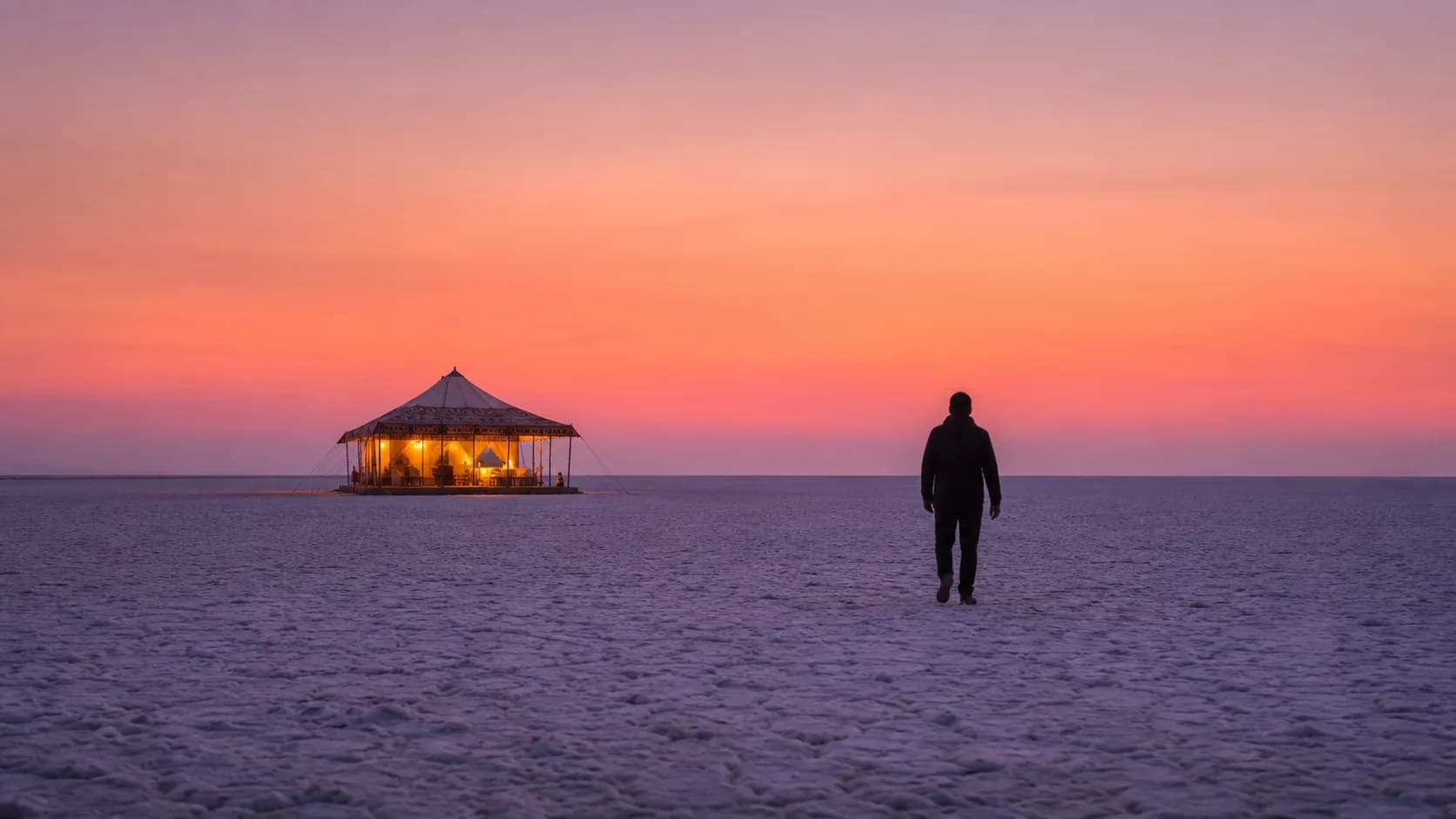
The Rann of Kutch presents a specific set of conditions that most Indian travellers — accustomed to packing for the hills or the beach or a city — have not encountered before. It is a cold desert: meaning days that can reach 28 degrees Celsius in November and nights that drop to three or four in January. It is a salt plain: meaning footwear that works on uneven crystalline terrain, and a reflective surface that delivers UV from both above and below. It is a festival: meaning evenings that call for something slightly more considered than trekking clothes. And it is a journey that may involve early morning transfers, long drives, and dust.
Getting the packing right means you can focus entirely on the experience. Get it wrong — underdress for a January sunrise, wear heels on the salt crust, forget sun protection — and even a short visit becomes physically uncomfortable in ways that distract from what you came to see. What follows is a comprehensive guide, organised by category and by month, to help you pack correctly for your Rann Utsav trip. Packages start from ₹6,300 for one night and can be booked by calling +91 92747 30220 — but the best-prepared guests are the ones who arrive knowing exactly what to expect.
Understanding the Climate Month by Month
October Travel and Early-November Stays
October can be suitable for wider Kutch travel when local access is confirmed, but it precedes the published 2026–27 Dhordo Tent City stay season, which starts on 1 November. Early-November days can be warm while evenings cool quickly. Pack sun protection and an evening layer, and check the forecast and access arrangements for your dates.
November Through December
The transition into winter proper. Daytime temperatures fall from around 25 degrees in early November to 18–20 degrees in December. Nights become significantly colder, dropping to between eight and twelve degrees in November and as low as five or six in December. A proper warm jacket — not a light fleece — is mandatory from mid-November onwards. The temperature on the White Rann at night can feel several degrees colder than in the camp due to the exposed flat terrain and the wind.
January
The coldest month of the festival and, for many visitors, the most atmospheric. Daytime temperatures range from 18 to 22 degrees and are pleasant once the sun is up. Nights and early mornings are a different matter: temperatures regularly fall to three or four degrees Celsius, and with wind chill the effective temperature on the Rann at five-thirty in the morning can feel closer to zero. January requires the most serious layering of any month in the season. Do not be caught without a down jacket, thermal base layers, gloves, and a hat.
February
The warmest and most relaxed month of the season. Days reach 25–28 degrees and evenings are mild — perhaps 12–15 degrees — requiring only a medium-weight jacket. Sun protection remains important. The full moon in February falls later in the month and the season typically concludes around Mahashivratri.
Clothing: The Art of Layering in a Cold Desert
The single most important principle for packing clothes for Rann Utsav is layering. A cold desert environment is not uniformly cold — it is dramatically variable across a single day, and clothing that is appropriate at noon is dangerously inadequate at midnight. Three layers is the system that works.
The base layer sits directly against the skin and its job is moisture management — keeping you dry. For cold-weather months (December–January) this means a thermal base: merino wool is the premium option and worth the investment because it manages temperature in both directions and does not develop odour the way synthetic thermals can. Polyester thermals work adequately and are substantially cheaper. For October and November, a cotton or bamboo base is sufficient.
The mid layer provides insulation. A fleece jacket — medium weight, with a zip — is the most versatile option. In December and January, a down gilet or lightweight down jacket worn as a mid-layer under a wind-resistant outer shell is more effective than a single heavy jacket. Down compresses small and is the warmest weight-for-weight option available.
The outer layer blocks wind and, if rain is possible (unlikely but not impossible in October near the monsoon close), water. A lightweight, packable wind-resistant jacket is the most practical outer layer. It need not be heavy — the base and mid layers do the thermal work; the outer layer simply prevents wind from stripping that warmth away.
For daytime and evenings in the tent city, you will want clothes that are practical but reasonably presentable. The evening cultural programme and dinner have a festive atmosphere, and many guests — particularly those visiting for a special occasion — bring one or two smarter outfits: a phulkari dupatta worn over a simple kurta, or a bandhani print shirt with dark trousers. The tent city is a festival, not a hiking camp, and dressing with some care for the evenings adds to the experience.
What Not to Wear
Avoid jeans for outdoor activities. They are heavy, slow to dry, and provide no thermal benefit once wet or damp. Avoid white or very pale clothing for the camel safari — the dust is pervasive. Avoid anything with long or loose trailing hems for the sunrise and sunset walks on the Rann — the salt crust catches fabric unexpectedly.
Footwear: The Most Important Single Packing Decision
The White Rann is not sand and it is not ordinary earth. It is a crystalline salt crust of varying thickness and consistency, formed by the evaporation of seasonal floodwater. In the areas you walk, it is generally firm and relatively flat, but the surface is irregular in fine detail — a mosaic of hexagonal salt crystals with small edges and ridges that you feel through any thin-soled shoe.
The ideal footwear for the Rann combines flat soles (absolutely no heels of any kind — even a small block heel is deeply uncomfortable on the salt and risks ankle turns), sufficient grip to handle the slightly slippery surface in some areas, and closed toes to prevent the fine salt dust from entering the shoe. A comfortable, flat-soled lace-up shoe — a trainer or a sturdy walking shoe — is the best option. Sandals, flip-flops, and heeled shoes are genuinely problematic on the salt crust.
For the tent city itself, any comfortable flat shoe is appropriate. A pair of lightweight slippers or sandals for moving between your tent and the bathrooms is worth packing separately — mornings are cold and you will not want to lace up proper shoes for a short walk.
Sun Protection: More Serious Than It Looks
The Rann is a reflective surface. Ultraviolet radiation strikes you from above as normal, and then bounces back upward from the white salt flat below. The combined exposure is roughly double what you experience standing on ordinary ground under the same sky. This is not merely relevant for October visitors in warm weather; it is equally relevant on a January afternoon when the air temperature is only 20 degrees and the sun feels gentle. The combination of low ambient warmth and high UV is the condition most likely to produce unexpected sunburn on Rann visitors.
Pack a broad-spectrum sunscreen with an SPF of at least 50. A wide-brimmed hat — not a baseball cap, which leaves ears, neck, and much of the face exposed, but a proper wide brim that covers all of these — is the most effective single sun protection item. Sunglasses with UV protection are necessary, and wraparound styles that prevent light entering from the sides are particularly useful on the flat.
A light cotton scarf or buff has multiple uses: sun protection for the neck on the Rann, dust protection during the camel safari, and warmth around the neck on cold mornings. It is the single most versatile item in the bag.
Camera Gear and Electronics
The photographic opportunities at Rann Utsav are, in the most straightforward sense, exceptional. Bring whatever camera you have, but consider a few specific pieces of supporting gear. A tripod — even a lightweight travel tripod — enables night photography and low-light shots of the cultural programme without camera shake. A polarising filter for daylight shooting on the Rann reduces glare from the salt surface and deepens the contrast between the white flat and the blue sky. Extra batteries are essential; the cold of January mornings drains battery life much faster than warm-weather shooting, and the charging options in the tents are standard two-pin Indian sockets.
A portable power bank is practically mandatory regardless of whether you are carrying a camera. Mobile signal is available in the tent city on most networks but drops on the Rann itself; having your phone well-charged before heading to the salt flat means you can use it as a navigation reference and still have battery for photography. Two power banks are not excessive on a three- or four-night trip.
Dust is a real hazard for camera equipment, particularly during the camel safari. A zip-lock bag or a small dry bag for your camera when not actively shooting is a sensible precaution.
Medicines and First Aid
A basic first aid kit for a Rann Utsav trip should include lip balm (the dry winter air and salt environment crack lips quickly and painfully), a good moisturising cream or lotion (hands and face suffer in the dry cold), an oral rehydration solution for any stomach upset, and any personal prescription medicines in sufficient quantity plus a day or two extra in case of delayed departure.
Altitude is not a factor here — the Rann is essentially at sea level — so altitude sickness medications are not necessary. Motion sickness remedies are worth considering if you are prone to it, as the roads near Kala Dungar have some winding sections. Paracetamol and an antihistamine round out a sensible basic kit.
Documents and Practical Items
The Rann of Kutch is a border area and requires an Inner Line Permit for visitors. This permit is issued at the entry point and requires a valid government-issued photo identity document — a passport, Aadhar card, or voter ID. Foreign nationals require a passport and may have additional documentation requirements; check current regulations before travelling. Carry the originals, not photocopies.
Your booking confirmation from Rann Utsav Tickets should be on your phone and ideally printed as well, since connectivity is not guaranteed at every point along the journey. Keep the customer service number — +91 92747 30220 — saved in your phone before you enter low-signal territory.
A small daypack is useful for the White Rann visits: it carries your jacket (which you will put on at sunset), water bottle, camera, sunscreen, and hat without requiring you to carry separate bags. The tent city provides drinking water; bringing a reusable bottle and refilling it is both practical and environmentally sensible.
Carry cash in sufficient quantity for the activities desk, bazaar shopping, tips for your tent attendant, and any incidental expenses on the day trip. The nearest ATM is in Bhuj, 85 kilometres away, and while some stalls accept UPI payments, smaller artisans often prefer cash.
A Final Note on Overpacking
The Swiss tents at the Dhordo tent city are comfortable but not large. There is storage space for two medium-sized bags, but if you are travelling as a couple or a family, coordinating bag sizes is worth thinking about in advance. A medium-sized rolling case plus a daypack is a practical combination for a two- or three-night stay. On a one-night trip, a single bag plus a small carry-on is sufficient. You will almost certainly come back with more than you brought — the bazaar is that good — so leaving a small amount of spare capacity in your bag is genuinely useful.