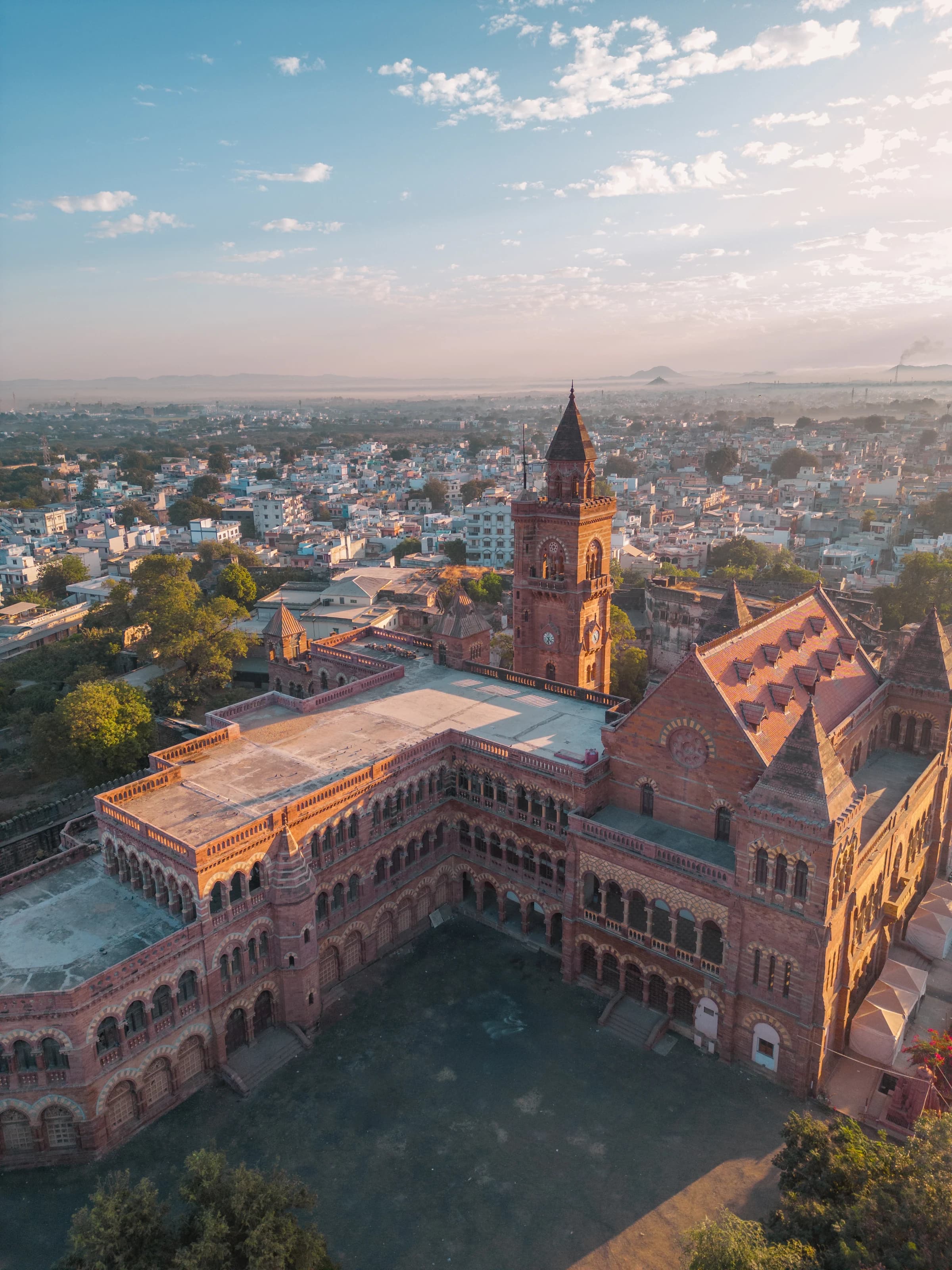
There are places you visit and places you feel, and Bhujodi belongs firmly to the second category. Tucked just eight kilometres south-east of Bhuj in the Kutch district of Gujarat, this unassuming cluster of homes and workshops is one of India's great living textile traditions — a village where the rhythmic clack of the handloom has been the soundtrack of daily life for more than five centuries. To walk into Bhujodi is to walk into an open-air museum that has never closed and never charged admission, where the weavers are not exhibits behind glass but artisans at work, threads in hand, happy to pause and show you how a length of raw wool becomes a shawl worthy of a gallery.
For travellers heading to the White Rann of Kutch for the Rann Utsav, Bhujodi is the perfect cultural counterpoint to the salt desert's vast white silence — an afternoon of colour, conversation and craftsmanship that lingers far longer than any souvenir. This is your complete guide to the weaving village of Kutch: its history, what to buy, how to reach it, and how to do it all the right way.
What Is Bhujodi Village Famous For?
Bhujodi is famous, first and foremost, for handloom weaving. The village is home to the Vankar community — a hereditary clan of weavers whose name literally means 'weaver' in Gujarati — and their craft has been passed down through generations for close to 500 years. Historically, the Vankar weavers shared a beautiful symbiotic relationship with the pastoral Rabari herders of Kutch, who supplied the raw sheep and camel wool that the weavers spun, dyed and wove into shawls, blankets and garments. The Rabari would commission textiles for their own weddings and ceremonies, and in return the weavers gained a steady supply of fibre. That centuries-old exchange shaped the distinctive aesthetic that Bhujodi is celebrated for today.
What sets Bhujodi cloth apart is its texture and its geometry. The traditional motifs — small, repeated patterns known locally as designs like the *dholki*, *vakhiyo* and *chaumukh* — are woven directly into the fabric rather than printed on, giving each piece a tactile, three-dimensional quality. Natural dyes, extra-weft work and a deep palette of earthy reds, indigos, ochres and undyed wool whites give Bhujodi textiles an unmistakable identity. Beyond weaving, the village and its surrounding hamlets are a hub for the broader Kutchi craft universe: intricate hand embroidery, *bandhani* tie-dye, *ajrakh* block printing and leather work all flourish here or nearby. It is no exaggeration to say that Bhujodi is one of the finest single windows into the entire craft heritage of Kutch.
A 500-Year-Old Weaving Tradition
To understand Bhujodi, you have to understand that weaving here is not a hobby revived for tourists — it is an unbroken inheritance. Families trace their looms back through seven, eight, sometimes more generations. A young weaver in Bhujodi typically learns at the elbow of a parent or grandparent, first winding bobbins as a child, then graduating to the pit loom, where the weaver sits with legs in a recess in the earthen floor, working the pedals by foot while the hands throw the shuttle and beat the weft.
The pit loom itself is a marvel of low-tech ingenuity, and watching a master at work is mesmerising — the whole body moves in coordination, an effortless choreography honed over decades. Every shawl is the product of hundreds of these small, repeated motions. A finely worked piece can take many days, even weeks, to complete. When you understand the labour, the modest prices in Bhujodi start to feel almost impossibly fair. This continuity of skill is precisely why organisations and government schemes — including the Vande Gram and rural craft-tourism initiatives that have spotlighted Bhujodi as a model heritage village — have worked to protect and promote the community, ensuring the looms keep running for generations yet to come.
What to Buy in Bhujodi Market
The short answer is: textiles, and lots of them. But it helps to know what you are looking at so you can buy with confidence. Here is what the bhujodi market and its workshops are best known for.
Shawls and Stoles
The signature Bhujodi product is the woollen shawl, woven from sheep or merino wool and finished with those characteristic woven borders. Lighter stoles in wool, cotton or silk blends make wonderful, packable gifts and are ideal for the cool desert evenings of a Rann Utsav trip. Prices range enormously depending on the wool, the density of the weave and whether the piece is naturally dyed — a simple cotton stole may cost a few hundred rupees, while a heavy, finely worked pure-wool shawl with extensive extra-weft detailing can run into several thousand.
Blankets and Throws
The traditional *dhabla* — a thick, warm blanket once woven for the Rabari herders — has been reimagined for contemporary homes as throws and bed covers. Substantial, durable and beautifully patterned, they are a serious souvenir for anyone with luggage space to spare.
Kutchi Embroidery
Bhujodi and its neighbouring craft families are also a gateway to the famous embroidery of Kutch — densely stitched, often mirror-worked panels, cushion covers, wall hangings, bags and garments. Each sub-region of Kutch has its own embroidery style, and the co-operatives here gather many of them under one roof.
Bandhani and Ajrakh
You will also find *bandhani* — the labour-intensive tie-dye technique that produces tiny dotted patterns — and *ajrakh*, the resist-block-printed cloth in deep indigos and madder reds. Scarves, dupattas, yardage and ready garments are all available, frequently straight from the family that made them.
Watching Artisans at Work
The real magic of Bhujodi is not in any shop window — it is in the workshops behind the shopfronts. Unlike a sanitised retail experience, here you can step into a weaver's home, watch a shawl emerge thread by thread on the pit loom, and ask the artisan about the motif they are working into the border. Many weavers genuinely enjoy explaining their craft; a few words of interest go a long way, and you may find yourself offered a cup of chai and a tour of the natural-dye pots out back.
Allow yourself unhurried time here. Wander the lanes, peer into open doorways, and let the conversations happen. Photography is usually welcome, but always ask first — these are people's homes, not a film set. This direct, human connection is what transforms a shopping trip into one of the most memorable afternoons of a Kutch holiday.
Ashok Hastkala & the Craft Co-operatives
If you would like a curated introduction before you start exploring the back lanes, Bhujodi has several well-known weaver-run showrooms and co-operatives. Ashok Hastkala is among the most established, displaying a wide range of shawls, stoles and home textiles from local weaving families under one roof, with knowledgeable staff who can explain the difference between the various wools and techniques.
The co-operative model matters here. By organising collectively, the weavers of Bhujodi have been able to reach wider markets, secure fairer prices and preserve traditional methods rather than being undercut by mass-produced imitations. Buying from these co-operatives and family showrooms means your money goes directly to the makers — a point we will return to at the end, because it is the single most important thing you can do for the future of this village.
Hiralaxmi Craft Park & Vande Mataram Memorial Nearby
Bhujodi sits at the heart of a small constellation of cultural stops, and two in particular are worth folding into your itinerary.
Hiralaxmi Memorial Craft Park
Located close to Bhujodi, the Hiralaxmi Memorial Craft Park — often simply called the craft park — is a thoughtfully laid-out space where artisans from across Kutch gather to sell their work directly. Set among gardens, it brings together weaving, embroidery, *bandhani*, pottery, bell-making, leather craft and more, making it an excellent one-stop shop if you are short on time. Live demonstrations and an annual craft mela add to the appeal, and the relaxed, open setting is a pleasant contrast to the bustle of the village lanes.
Vande Mataram Memorial
A short drive from Bhujodi, the Vande Mataram Memorial is a striking multimedia museum dedicated to India's freedom struggle. Built around a replica of the old Parliament House, it uses sound-and-light shows, animatronics and immersive galleries to tell the story of the country's journey to independence. It is a popular family attraction and pairs naturally with a Bhujodi visit, offering a complete cultural half-day before you continue on to the White Rann.
How to Reach Bhujodi from Bhuj
Reaching Bhujodi could not be simpler. The village lies roughly eight kilometres south-east of Bhuj, the district headquarters of Kutch, on the road towards Bhachau. The journey takes only about 15 to 20 minutes by car.
- By taxi or auto-rickshaw: The easiest option. Taxis and autos are readily available in Bhuj and the short fare is modest. You can ask the driver to wait, as Bhujodi is best explored at leisure.
- By car: If you are driving yourself or have a hired vehicle as part of a Rann Utsav package, simply head out of Bhuj on the Bhachau road — Bhujodi is well signposted.
- By bus: Local buses and shared jeeps run from Bhuj towards Bhujodi and the surrounding villages, though for comfort and flexibility a private vehicle is far preferable.
The nearest airport and railway station are both in Bhuj, which connects to Ahmedabad, Mumbai and beyond, so most visitors base themselves in Bhuj or at the Rann Utsav Tent City and make Bhujodi a comfortable day excursion.
Best Time to Visit Bhujodi
The best time to visit Bhujodi is during the cooler months from November to February, which — happily — coincides exactly with the Rann Utsav season. During these months the Kutch climate is pleasant by day and crisp by night, ideal for wandering the village lanes and, of course, for buying the very woollens that come into their own in the desert chill.
This window is also when the weavers are at their busiest and most stocked, preparing for the influx of festival visitors, so you will find the widest selection. The summer months from April to June are punishingly hot in Kutch and best avoided, while the monsoon brings its own challenges. For the 2026-27 season, plan your Bhujodi visit alongside your Rann Utsav booking — late November through February will give you the finest weather, the fullest workshops and the most magical full-moon nights out on the salt flats.
Shopping & Bargaining Tips
A little etiquette goes a long way in Bhujodi. Keep these points in mind:
- Bargain gently, not aggressively. Prices here are already remarkably fair for handmade work. A modest, good-humoured negotiation is fine, but driving a hard bargain on a piece that took an artisan a week to weave does no one credit.
- Ask about the materials. Genuine hand-spun, naturally dyed pieces cost more than mill-spun, chemically dyed ones — and they are worth it. A reputable weaver will happily tell you exactly what you are buying.
- Look for the hand of the maker. Slight irregularities are the signature of authentic handloom, not a flaw. Perfectly uniform 'handloom' pieces are often power-loom imitations.
- Carry cash. While some larger showrooms accept cards or UPI, many small family workshops deal in cash, so come prepared.
- Buy direct where you can. Purchasing straight from the weaving family or the co-operative ensures the maker receives the full value of their labour.
Combining Bhujodi with Rann Utsav
For most visitors, Bhujodi is not a standalone destination but a jewel in the broader Kutch itinerary, and it slots beautifully alongside the Rann Utsav. The festival's Tent City rises on the edge of the White Rann at Dhordo, roughly 80 kilometres from Bhuj, and most travellers spend their days exploring the region's villages and their evenings out on the moonlit salt desert.
A classic plan: arrive in Bhuj, spend a morning at Bhujodi watching the weavers and shopping, fold in the Hiralaxmi Craft Park and the Vande Mataram Memorial in the afternoon, then drive out to the Tent City for sunset, camel rides, folk music and the surreal spectacle of the full-moon Rann. Your Bhujodi shawl, bought that very morning, becomes the perfect companion for the cold desert night. It is this combination of deep craft heritage and sublime natural wonder that makes Kutch in festival season one of the most rewarding journeys in India.
> Ready to plan it all? Call our Kutch travel experts on +91 92747 30220 and we will build Bhujodi, the craft parks and the White Rann into one seamless trip.
Supporting Authentic Artisans
If you take one thing from this guide, let it be this: how you buy in Bhujodi matters as much as what you buy. The 500-year-old tradition of this village survives only because there remains a market for genuine, handmade, fairly priced craft. Every time you buy directly from a weaving family or a community co-operative — rather than a mass-produced lookalike in a city showroom — you are casting a vote for the loom to keep clacking, for the next generation of Vankar children to choose the family craft over the call of the city.
So take your time, ask questions, pay a fair price, and carry home a piece of cloth that holds the story of the hands that made it. Bhujodi is more than a shopping stop; it is a 500-year conversation between a community and its craft, and you are warmly invited to be part of it. Make Bhujodi a chapter of your Rann Utsav 2026-27 journey — explore our curated packages and let us bring the weaving village of Kutch to your doorstep.