Gujarat in Seven Days: A Journey Worth Every Hour
Gujarat is a state that rewards those who come with curiosity and adequate time. It is one of those places — like Rajasthan or Kerala — that has a fully formed identity: a distinct cuisine, a distinctive aesthetic, a living craft tradition, a particular quality of light, and a history that spans Harappan civilisation, Mughal courtly culture, British colonial administration and a fiercely independent mercantile tradition. Seven days is not long enough to exhaust it, but it is more than enough to understand why people return.
This itinerary combines the two experiences that most visitors put at the top of their Gujarat list — the old city of Ahmedabad and the White Rann of Kutch at Rann Utsav — and links them with the craft villages and heritage palaces of Bhuj, creating a journey with genuine arc and rhythm. Each day builds on the one before, and by Day Seven you will leave with the sense that Gujarat has revealed itself in layers rather than all at once.
Day One — Ahmedabad: Arrival and First Evening
Most international visitors to Gujarat fly into Sardar Vallabhbhai Patel International Airport in Ahmedabad, which has direct connections from the Gulf, Southeast Asia and several European cities. Domestic connections from Delhi, Mumbai, Bengaluru and Kolkata are frequent throughout the day.
Ahmedabad is India's first UNESCO World Heritage City — a designation awarded in 2017 in recognition of the historic walled city (old Ahmedabad), which contains one of the finest concentrations of Indo-Saracenic and Mughal-influenced architecture in India. On your first evening, rather than attempting sightseeing after a journey, we suggest walking the old city's main artery — Relief Road or the lanes around Manek Chowk — for an hour at dusk, when the old buildings catch the evening light and the street food vendors begin to lay out their stalls. Ahmedabad's evening food culture — pani puri, sev puri, dabeli, dhokla chaat — is a pleasure entirely in its own right.
Stay in the old city itself if possible; several well-regarded heritage hotels occupy restored havelis in the pols (traditional neighbourhood clusters), offering a more textured experience than the chain hotels on the western side of the river.
Day Two — Ahmedabad: Sabarmati Ashram, Old City and Stepwells
Ahmedabad's Sabarmati Ashram — established by Mahatma Gandhi in 1917 and the launchpad for the historic Salt March of 1930 — is one of those places that carries its history quietly but unmistakably. The museum at the ashram, recently redesigned in a style that is far more interpretively sophisticated than the typical Indian heritage museum, presents Gandhi's life and thought with clarity and emotional intelligence. Allow two hours here; the riverside setting, with the Sabarmati flowing beyond the ashram's gardens, adds to the contemplative quality of the visit.
The afternoon is best devoted to the old city's architectural heritage — the Jama Masjid (built 1424, an exquisite example of Indo-Saracenic design with 260 pillars), the Teen Darwaza gateway, and the network of pols with their carved wooden facades, intricate latticework and communal courtyards. A guided heritage walk of two to three hours, available through several Ahmedabad tourism operators, is strongly recommended for first-time visitors — the layers of history in the old city are considerably more legible with a knowledgeable companion.
If time allows, the Adalaj Vav (stepwell), 19 kilometres from the city centre, is one of the most extraordinary examples of Hindu-Jain architectural tradition in India — a five-storey underground structure built around a central well, its walls carved in extraordinary detail. Late afternoon light in the stepwell's lower chambers is one of those accidental masterpieces of architectural illumination that no photographer ever adequately captures but everyone tries.
Day Three — Drive or Train to Bhuj: En Route to Kutch
The distance from Ahmedabad to Bhuj is approximately 350 kilometres — a six to seven hour drive by road, or roughly eight to nine hours by train on the Ahmedabad-Bhuj Sarvodaya Express or the Kutch Express. The train is comfortable and the journey through the Rann approach is scenically engaging; the road, while manageable, is long enough that most visitors prefer the train or, if budget allows, an internal flight from Ahmedabad to Bhuj (approximately one hour, operated by IndiGo and Air India on select days).
Arriving in Bhuj in the afternoon or early evening, check into your accommodation and spend the evening wandering the old bazaar near Hamirsar Lake — one of the more pleasant evening walks in Gujarat, with handicraft shops, street food and the illuminated lake providing an agreeable end to a travel day.
Day Four — Bhuj: Palaces, Museum and Craft Village
Devote the morning to Bhuj's three principal heritage sites: the Aina Mahal (Palace of Mirrors, built in the 18th century with extraordinary Venetian glass and Flemish chandelier interiors), Prag Mahal (1865 Italian Gothic Revival palace with a clock tower offering panoramic city views) and the Kutch Museum (Gujarat's oldest museum, established 1877, with textile and archaeological collections of genuine quality). Three sites in a morning is manageable at a comfortable pace; allow approximately ninety minutes each and take your time with the Aina Mahal in particular, whose interiors repay slow looking.
The afternoon is well spent in one of the craft villages within reach of Bhuj — Nirona (40 minutes, for Rogan art and copper bells) or Bhujodi (20 minutes, for handloom weaving) are both accessible for afternoon visits and return to Bhuj for dinner. The craft demonstrations in these villages are freely available to visitors and purchasing directly from the artisans is both more economical and more meaningful than buying through intermediary stalls.
Dinner at a Bhuj restaurant serving traditional Kutchi thali — generous, primarily vegetarian, featuring bajra rotis, fresh white butter, multiple vegetable preparations and a sweet — is the ideal close to a day in the capital of Kutch.
Day Five — Drive to Dhordo: Arrival at Rann Utsav
The drive from Bhuj to Dhordo, approximately 80 kilometres and one and a half to two hours, is best completed in the late afternoon so that you arrive at the tent city with enough time to settle in and freshen up before the evening programme.
Check-in at the Dhordo tent city is smooth and welcoming. After the drive and the preceding days of intense sightseeing, the tent — comfortable, well-appointed, quiet — will feel like a genuine retreat. Dinner at the tent city is typically served buffet-style from six-thirty or seven pm, allowing time for a meal before the cultural programme begins.
The evening cultural programme — folk music from the Langa and Manganiyar communities, Bhavai theatre, Kalbelia dance, Garba — runs for approximately two to three hours. This first Rann Utsav evening is often the most emotionally resonant moment of the entire journey: the combination of extraordinary folk performance, the cool winter air and the consciousness that the White Rann lies just beyond the tent city boundary creates an atmosphere quite unlike any other festival in India.
Package prices — ₹6,300 for one night, ₹12,600 for two nights and three days, ₹18,900 for three nights and four days — should be selected based on your overall itinerary. Two nights at the tent city, represented in this itinerary by Days Five and Six, corresponds to the ₹12,600 package. Contact us at +91 92747 30220 to confirm availability and booking.
Day Six — The White Rann and the Bazaar
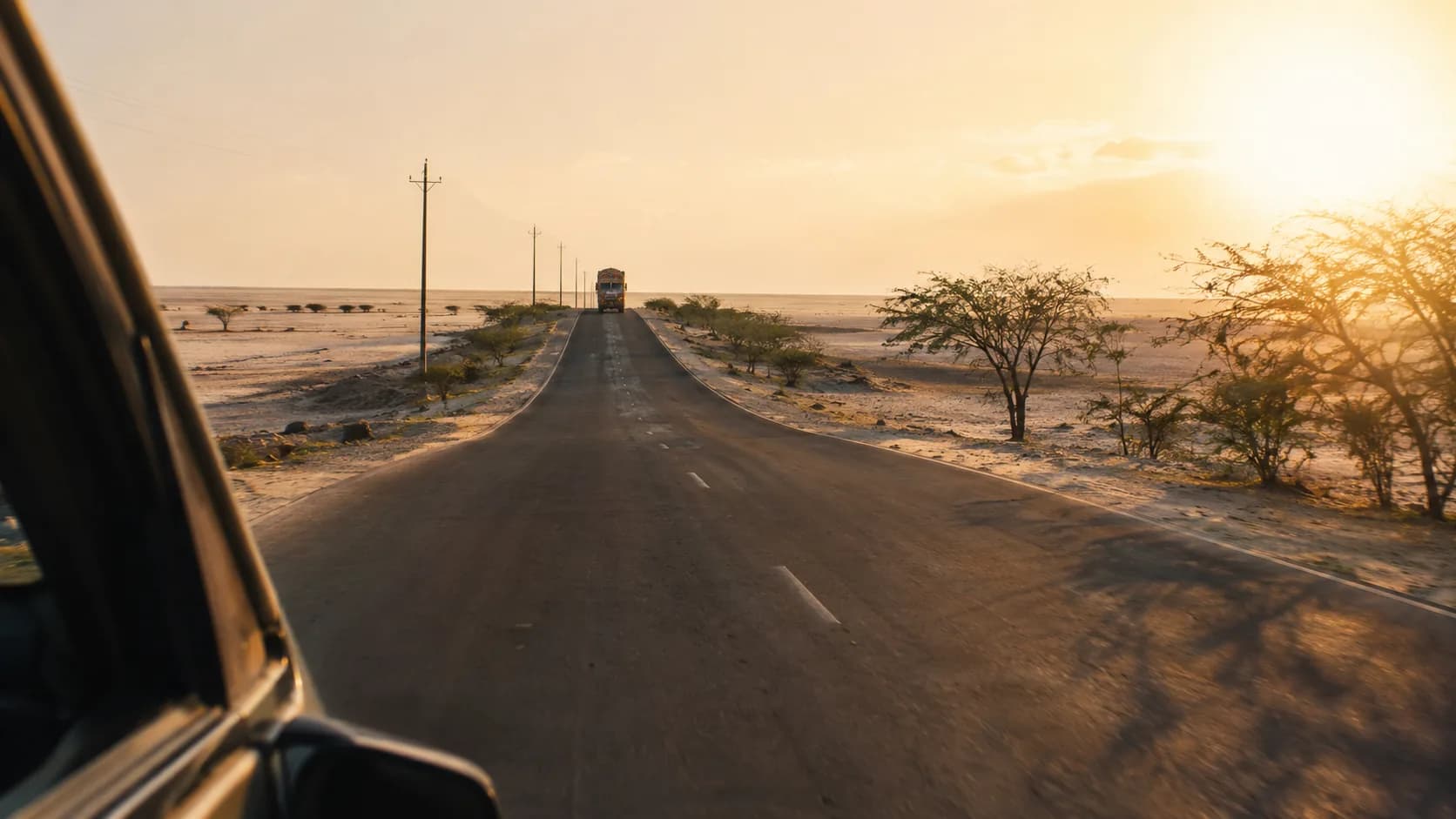
The second day at the tent city is the day to give to the experience most deeply. Begin with an early morning walk to the Rann edge — the tent city is within walking distance of the salt flat, and the dawn light across the white surface in the cold morning air is a sight that tends to silence conversation entirely. The sound is equally striking: total silence, or near-total, broken only by birdsong from the scrub margins.
After breakfast, devote the late morning to the artisan bazaar — the comprehensive craft market within the tent city complex where Kutchi artisans sell directly from their stalls. The guidance offered in our Kutch handicrafts shopping guide applies here: allow time for comparison, prioritise the Rogan art stall and the Ajrakh block print vendors, and carry cash.
The afternoon is well suited to a short excursion to Kala Dungar (the Black Hill, 25 kilometres from Dhordo, the highest point in Kutch with panoramic Rann views) and return, followed by a rest before the second evening's cultural programme. Alternatively, a visit to Chhari Dhand flamingo sanctuary in the morning and the bazaar in the afternoon makes for an equally satisfying day.
Day Seven — Return to Ahmedabad and Onward
Departure day from the Dhordo tent city. Morning check-out is typically by ten or eleven am; after breakfast, the drive back to Bhuj takes one and a half to two hours, arriving in time for lunch in the city before proceeding to Bhuj airport for a domestic flight or to Bhuj railway station for the Bhuj-Ahmedabad train.
If your international or domestic connection is from Ahmedabad rather than Bhuj, and if you have a late evening departure, consider breaking the Bhuj-Ahmedabad journey with a stop at Modhera Sun Temple (approximately 100 kilometres north of Ahmedabad, a remarkable 11th-century temple with intricate carving and a magnificent stepped tank) or at Patan (100 kilometres north of Ahmedabad), home to the Rani ki Vav stepwell — a UNESCO World Heritage Site and the finest stepwell in India.
Seven days in Gujarat will not exhaust the state, but it will give you enough of it to understand why those who visit once almost always plan to return.
Booking Notes
For the Rann Utsav portion of this itinerary, book well in advance — particularly for dates around the full moon (Purnima), which are the most popular and fill up months ahead. Our team at +91 92747 30220 is available to advise on availability, package selection and transport logistics across the full seven-day circuit. Those wishing to extend the itinerary to include Dholavira or Mandvi should allow a minimum of nine to ten days.