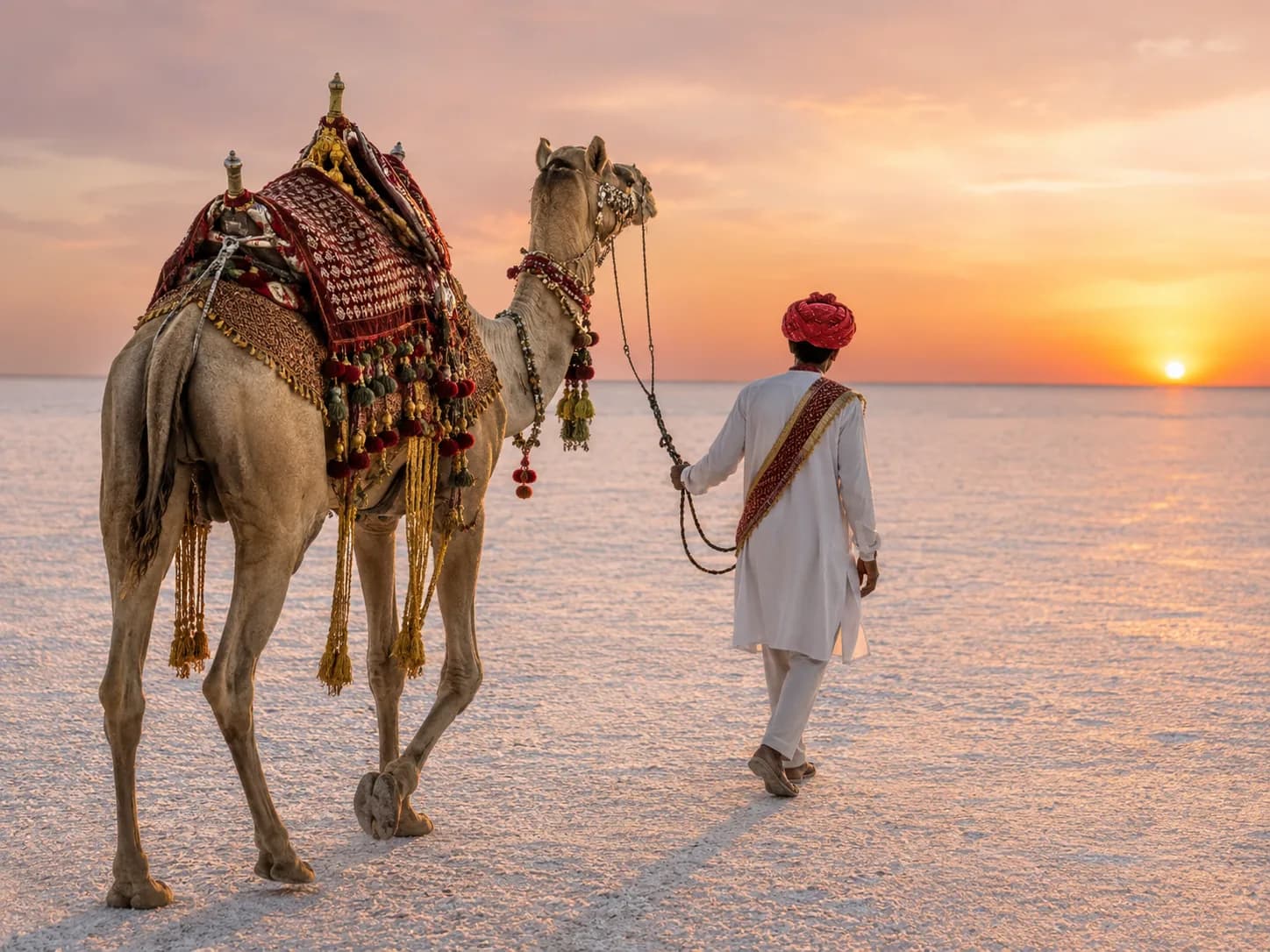
The Question Every First-Timer Asks
When you start planning a trip to the Rann Utsav — that luminous, otherworldly festival set against the white salt desert of Kutch — one question surfaces almost immediately: do I need an AC cottage, or will the Non-AC option do? It sounds like a simple decision. In practice, it shapes almost everything about your experience — your budget, your comfort on cool desert nights, and the overall memory you carry home.
This guide cuts through the noise and helps you make the right call based on three things that actually matter: the month you are travelling, your budget, and how particular you are about sleeping conditions.
Understanding the Accommodation Categories
The Rann Utsav tent city at Dhordo offers three primary accommodation types: the Non-AC Swiss Cottage, the AC Swiss Cottage, and the premium Rajwadi AC Cottage. Each sits within the same festival grounds and grants access to the same cultural programme, the same starlit salt flats at midnight, and the same sunrise over the White Rann — but the experience inside the tent differs considerably.
The Non-AC Swiss Cottage
The Non-AC Swiss Cottage is the entry point into the Rann Utsav experience, and it is far more comfortable than the word "Non-AC" might suggest. These are proper canvas cottages — not camping tents — furnished with beds, linen, basic furniture, an attached washroom, and running water. The décor is clean and functional, with nods to local Kutchi craft in the cushions and wall hangings.
Packages starting from ₹6,300 per person for a one-night, two-day stay make this the most accessible option in the festival, and it delivers genuine value. The one-night package includes accommodation, a cultural programme, breakfast, and dinner — the essentials of a full Rann Utsav experience without paying a premium for temperature control.
The question of whether you need air conditioning at the White Rann is more nuanced than most visitors realise. The Kutch desert operates on extremes: it is not uniformly cold, nor uniformly warm. Temperatures — and therefore the necessity of AC — swing dramatically depending on the month.
Temperatures by Month and Why They Matter
October and November are widely considered the most pleasant months to visit the White Rann. Daytime temperatures hover between 28 and 33 degrees Celsius — warm enough to be comfortable, cool enough to walk the salt flats without discomfort. Nights drop to around 18 to 22 degrees, which is genuinely pleasant sleeping weather. In this window, a Non-AC Swiss Cottage is not merely adequate — it is arguably the better choice. You will sleep with a light blanket, wake to birdsong and cool morning air, and feel entirely at ease. Paying extra for AC you will not switch on seems unnecessary.
December changes the calculation. As the festival reaches its peak popularity — this is when the salt desert turns brightest under full-moon nights and the cultural programme is at its most elaborate — nighttime temperatures in Kutch begin to fall. By mid-December, nights can dip to 12 to 15 degrees Celsius. By the end of December, single-digit nights are not unusual. Inside a canvas cottage without insulation beyond the fabric walls, this is cold enough to disrupt sleep for anyone not accustomed to it.
January is the coldest month. Early January sees temperatures falling to seven or eight degrees at night, occasionally lower in years of a strong cold wave sweeping in from Rajasthan. A Non-AC cottage in January is survivable with adequate blankets — the festival provides them — but genuinely warm and restorative sleep becomes harder. This is when the AC cottage earns its price difference decisively.
February marks the tail end of the festival, and temperatures begin their gentle climb back toward comfort. By mid-February, nights are 14 to 16 degrees again, and the Non-AC cottage reasserts its value.
The AC Swiss Cottage
The AC Swiss Cottage occupies the sweet spot between accessibility and comfort. Structurally similar to the Non-AC version — a well-appointed canvas cottage with proper furniture, an attached bath, and local décor accents — it adds a reverse-cycle air conditioning unit that functions as both a cooler and a heater. In December and January, this heater function is what matters. You return from the midnight salt desert walk — genuinely chilled — and step into a cottage that is warm and welcoming. The quality of sleep improves noticeably.
Packages for AC Swiss Cottages begin at ₹12,600 per person for two nights and three days, stepping up to ₹18,900 for three nights and four days. The price difference over the Non-AC option reflects not just the electricity cost but the category upgrade in the overall feel of the accommodation.
For families travelling with children or elderly parents, the AC cottage is the right choice regardless of month. Children and older travellers are more susceptible to cold-related discomfort, and the peace of mind that comes from having temperature control — particularly if a cold wave arrives unexpectedly — is worth the premium.
For couples, the AC Swiss Cottage also adds a layer of intimacy. The ambient warmth, softer lighting, and slightly more refined finish make it a popular choice for anniversaries and romantic getaways.
The Rajwadi AC Cottage: The Premium Tier
If the Swiss Cottage is comfortable, the Rajwadi AC Cottage is indulgent. These are the flagship accommodation units at the tent city — larger in footprint, decorated in rich Rajasthani style with carved wooden furniture, embroidered fabrics, traditional lanterns, and a private sit-out area where you can take your morning chai looking out over the desert. The bathroom is better appointed, the bed linen is of a higher grade, and the overall sense of occasion is unmistakably elevated.
The Rajwadi is designed for travellers who want the Rann Utsav experience without compromising on luxury. It is particularly popular among couples celebrating honeymoons, anniversaries, and milestone birthdays, as well as business travellers who have been accustomed to five-star hotels and are unwilling to rough even the gentlest of edges.
From a comfort standpoint, the Rajwadi operates at a level that genuinely competes with boutique resorts. The private sit-out is a particular highlight — watching the desert light shift from gold to amber to pale grey as the sun sets, from your own private chair with a cup of masala chai, is an experience that is difficult to put a price on.
Making the Decision: A Framework
Think about your trip in three dimensions.
The first is timing. If you are visiting between October and mid-November, or in February, the Non-AC Swiss Cottage offers tremendous value and you will not feel the absence of temperature control. If you are visiting in December, January, or during any cold-wave period, the AC option is worth the additional cost for the quality of sleep alone.
The second dimension is budget. The one-night, two-day package at ₹6,300 is a genuinely affordable way to experience one of India's most remarkable festivals. If budget is a priority, the Non-AC option in October or November is an excellent choice. If you have more flexibility, the AC Swiss Cottage at ₹12,600 for a two-night, three-day stay gives you an extra day at the festival and reliably warm nights.
The third dimension is personal comfort preference. Some travellers are perfectly happy in rustic conditions and find the slight rawness of a Non-AC canvas cottage adds to the sense of adventure. Others — and there is no shame in this — simply sleep better when they control the temperature of their environment. Be honest with yourself about which type of traveller you are before booking.
What Remains the Same Across All Categories
It is worth emphasising that the accommodation category does not change the fundamental Rann Utsav experience. Whether you are in a Non-AC Swiss Cottage or a Rajwadi Cottage, you have access to the same cultural programme — folk dances, Garba evenings, craft demonstrations — the same dinner under the stars, and the same sunrise safari to the salt desert. The White Rann does not discriminate between budget and premium guests. The moonlight on the salt flats is equally brilliant for everyone.
The activities — camel rides, ATV rides, paramotoring, folk performances — are available to all guests. The meals, which are buffet-style and include Gujarati and North Indian options, are served at the same dining area. The festival atmosphere — the colourful stalls, the artisans, the evening performances — is shared equally.
What you are paying for with the premium categories is the quality of your private space at the end of the day. And that, ultimately, is a personal decision.
Our Recommendation
For October and November visits: book the Non-AC Swiss Cottage with confidence. The weather is your friend, the value is excellent, and you will have a wonderful time.
For December and January visits: budget at least for the AC Swiss Cottage. The Kutch winters are genuinely cold, and warm sleep will make your days better.
For honeymoons, anniversaries, and special occasions year-round: the Rajwadi AC Cottage is designed for you. The premium is meaningful, and the experience is unlike anything else the tent city offers.
To discuss which package suits your travel dates and group size, call the team at +91 92747 30220. Bookings for peak dates in December and January fill up weeks in advance, so planning early is always advisable.