The Winter Holiday Decision Every Indian Family Faces
It is October, or perhaps November. The school holidays are approaching. The family WhatsApp group is active. Someone suggests Goa. Someone else suggests Kerala. A third person, who has perhaps been reading travel blogs, says: what about Rann Utsav?
And so begins the classic Indian winter holiday debate — the familiar versus the unfamiliar, the beach versus the desert, the relaxation holiday versus the experience holiday. This piece is for families, couples, and groups of friends who find themselves in exactly this position: knowing that a beach is always an option, wondering whether the White Rann might offer something more.
The honest answer is nuanced. A beach holiday and the Rann Utsav are fundamentally different kinds of travel, and the right choice depends entirely on what you want from a holiday. This comparison tries to set that out clearly.
Quick answer: choose Rann Utsav over a beach holiday if you want a once-a-year cultural and landscape experience with family-friendly activities and a fixed, transparent price from ₹6,300 per person; choose a beach if you want pure relaxation with fewer scheduled activities. Many families who have done both call the White Rann the more memorable of the two.
What a Beach Holiday Offers
The appeal of a beach holiday — whether in Goa, Kerala, the Andaman Islands, or Gokarna — is well understood. The combination of warm weather, sea, sand, and the complete absence of obligation is one of the most reliable formulas in travel. There is no itinerary to follow, no programme to keep, no experience to maximise. You lie in the sun, you swim when you feel like it, you eat seafood when you are hungry, and you read or sleep when you are not.
For many families, particularly those with young children, this simplicity is the point. A beach holiday allows parents to genuinely rest while children are entertained by the sea. There is no cultural programme to engage with, no excursions to organise, no early morning wake-up for the best salt flat light. The beach asks nothing of you.
The Kerala and Goa Experience
Kerala and Goa offer beach holidays with very different characters. Goa is more energetic — particularly North Goa, which has a party culture that persists even outside the New Year peak. It has excellent seafood, lively beach shacks, and a casual, social atmosphere. South Goa is quieter and more scenic, with less developed beaches and a slower pace.
Kerala's beaches — Kovalam, Varkala, Marari — offer something more tranquil. The backwaters, Ayurveda retreats, and houseboats add layers of experience that raise a Kerala holiday well above the ordinary. Kerala is also better suited to families who want cultural engagement alongside beach time.
Both are warm in December and January — Goa around twenty-eight to thirty degrees Celsius, Kerala similar. Both are well-connected and have established tourism infrastructure. Both are, in the best sense, reliable. You know what you are getting, and what you are getting is good.
The Costs
December in Goa and Kerala is peak season, which means prices are elevated. A decent beachside resort in Goa during Christmas week starts at ₹5,000 to ₹8,000 per room per night for a family room, and goes up sharply from there. Kerala's resort hotels can be even more expensive, with premium properties at Varkala or Marari charging ₹12,000 to ₹25,000 per night. Add meals, transport, and activities, and a five-night beach holiday for a family of four can easily reach ₹1,20,000 to ₹1,80,000.
What Rann Utsav Offers Instead
The Rann Utsav is not a relaxation holiday. This is an important distinction to make upfront. If what you need is rest — if you are genuinely exhausted and require a week of doing nothing — the White Rann is not the right prescription. The tent city at Dhordo is comfortable and well-run, but it is a festival destination, not a resort. The landscape demands engagement.
What Rann Utsav offers instead is experience — and a very specific kind of experience that has become one of India's most distinctive travel offerings.
The Landscape
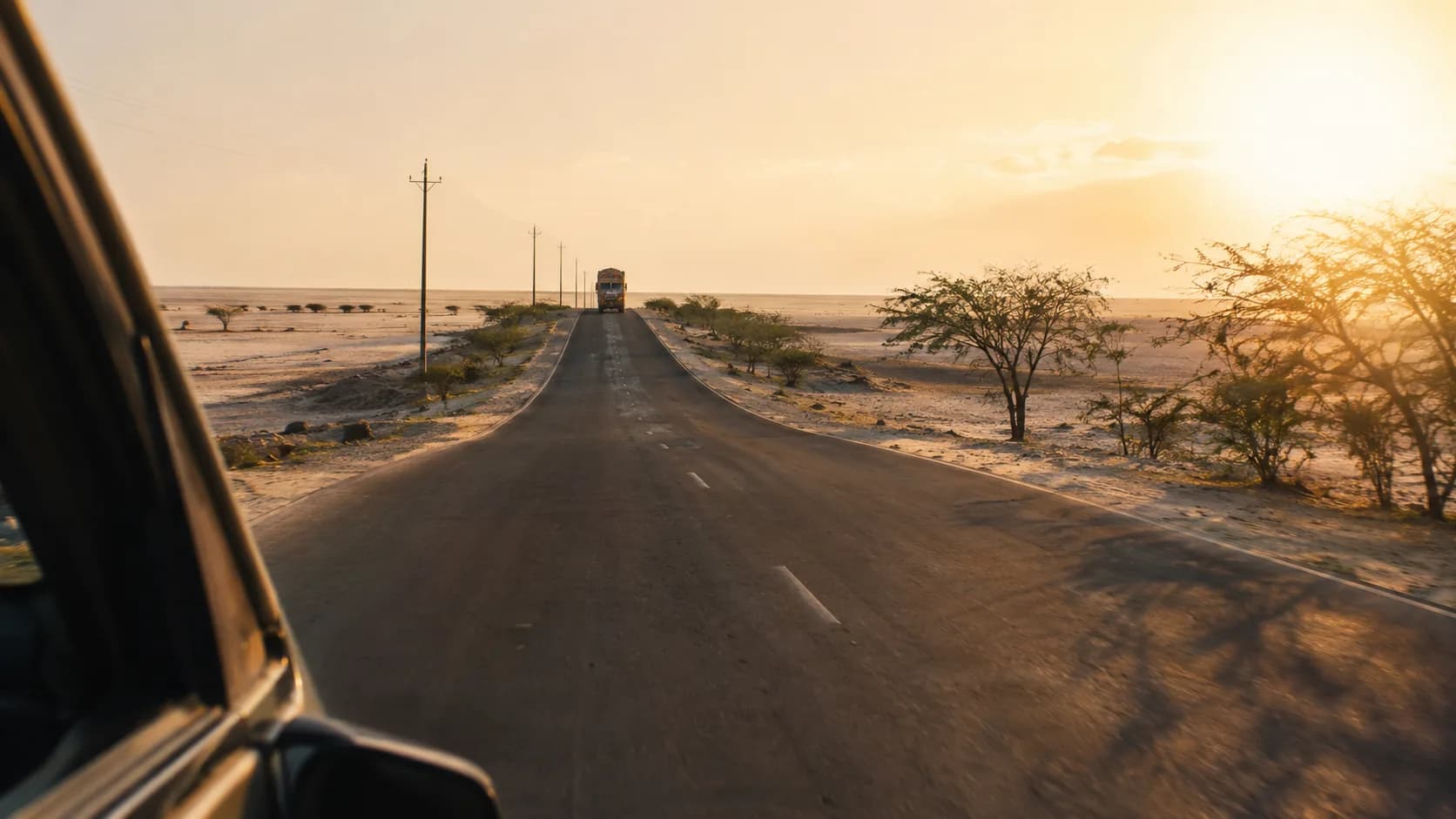
The White Rann of Kutch is a salt desert unlike any other landscape in India. It is flat, white, and vast — so flat that the horizon disappears and the sky becomes everything. On a full moon night, the salt reflects the moonlight and the distinction between earth and sky genuinely blurs. This is not a poetic exaggeration; it is a physical reality of the landscape that photographs only partially capture.
For children who have grown up on beach holidays, the Rann is a revelation. There are no waves, no umbrellas, no ice cream vendors — there is just space, and light, and an extraordinary silence broken only by the wind. Many children find it initially disorienting and then deeply compelling.
The Cultural Dimension
Kutch is one of India's most extraordinary craft regions. The embroidery traditions of Kutch — there are more than a dozen distinct styles across different communities — represent some of the finest textile art produced anywhere in the world. The Ajrakh block printing, the Banni grassland weaving, the traditional bell making and pottery are all living traditions, practiced in the villages around the Rann.
At the Rann Utsav tent city, these traditions are made accessible through craft exhibitions and performances. Each evening, folk musicians and dancers perform — the music of Kutch has a haunting, ancient quality that stays with listeners long after the performance ends. For families who want their children to engage with Indian cultural heritage in a direct and memorable way, this is genuinely valuable.
Activities
Beach holidays offer swimming, watersports, and rest. The Rann Utsav offers a different menu: camel rides and jeep safaris across the salt flat, hot air balloon rides over the desert, ATV tours, cultural walks through nearby villages, birdwatching (the Rann is an important habitat for flamingoes and migratory species), and visits to the craft communities of Kutch.
For active children and curious adults, the Rann Utsav's activity programme is richer and more varied than a standard beach holiday. There is more to do in terms of genuine discovery, even if there is less to do in terms of simple leisure.
Pricing and Value
Rann Utsav packages at the tent city start at ₹6,300 per person for one night and two days, ₹12,600 for two nights and three days, and ₹18,900 for three nights and four days. These packages include accommodation, meals, and cultural activities — making the comparison with beach holiday costs quite favourable.
A family of four staying for three nights at Rann Utsav, choosing the two-night, three-day package at ₹12,600 per person, would spend approximately ₹46,000 all-in for accommodation and meals. The equivalent stay at a mid-range Goa resort — with meals costed separately — could easily exceed ₹80,000 to ₹1,00,000. The Rann Utsav represents significantly better value for money.
For bookings and to discuss family package options, call +91 92747 30220.
A Direct Comparison by Category
Uniqueness
A beach holiday is wonderful, but it is not unique. There are beaches in Goa and Kerala that are genuinely beautiful, but the experience of lying on a beach, eating seafood, and watching the sunset is one that many Indian families have done multiple times. The White Rann is genuinely singular — there is nothing else in India that looks or feels like it, and nothing equivalent that can be easily replicated.
Value for Money
Rann Utsav offers a different kind of value from a beach holiday. Compare the full selected-date costs in each destination: accommodation, meals, transfers, activities and taxes can vary, so the package headline alone is not a complete comparison.
Family-Friendliness
Both options work well for families, but in different ways. The beach is low-effort for parents — children can be trusted to play in the sea while adults rest. The Rann Utsav requires more engagement — excursions have to be planned, children need to be interested in what they see. For families with curious, engaged children, the Rann is richly rewarding. For families with very young children who primarily need to run around near water, the beach may be more practical.
Cultural Depth
The Rann Utsav wins this category clearly. A beach holiday in Goa, however enjoyable, does not offer the same engagement with Indian cultural heritage as a few days in Kutch.
Relaxation
The beach wins this category clearly. If you need rest above all else, the White Rann is not the prescription.
Memories
This is the category that perhaps matters most. Ask someone who has been to Goa in December about their holiday five years later — they will remember warmth, seafood, and fun. Ask someone who has stood on the White Rann under a full moon — they will describe the experience in terms that sound different. The Rann stays with people in a way that is difficult to articulate but consistently reported.
Who Should Choose a Beach Holiday
Choose a beach holiday if you genuinely need rest. Choose it if you are travelling with very young children who need to play in water. Choose it if this is one of very few holidays you get each year and you want it to be reliably enjoyable rather than adventurous. There is no shame in this choice — beach holidays are wonderful precisely because they are reliably wonderful.
Who Should Choose Rann Utsav
Choose Rann Utsav if you want something that will be talked about for years. Choose it if your children are old enough to be genuinely curious — roughly six years and above. Choose it if you are tired of the beach-holiday template and want a winter break that feels like a genuine discovery. Choose it if you care about value for money. Choose it if you want to engage with one of India's most distinctive regional cultures before the world catches up with Kutch.
The Verdict
The beach wins on relaxation. Rann Utsav wins on experience, value, cultural depth, and the quality of memories it creates. If you are planning a holiday and you want to choose the option you will still be telling stories about in ten years, the White Rann is your answer.
Rann Utsav package enquiries: +91 92747 30220. Packages from ₹6,300 per person.