Most travellers making the drive from Bhuj to Dhordo are watching the clock, not the horizon — checking the time against their tent city check-in, half-listening to the driver, waiting for the white to appear. But somewhere past Bhirandiyara, the landscape changes in a way worth pausing for. The scrub thins. The land flattens into a pale, silver-green sea of grass that runs to the edge of sight, broken only by the occasional acacia, a grazing herd, or a low mud-and-thatch settlement. This is Banni — and it deserves more than a glance through a car window.
Banni is not filler between Bhuj and the Rann. It is one of the largest tropical grassland ecosystems in Asia, a landscape with its own ecology, its own economy, and its own people, whose relationship with this land predates the festival, predates the highway, and will outlast both. Understanding Banni changes what the drive to Dhordo means — it stops being transit time and becomes the first real encounter with Kutch.
What Makes Banni One of Asia's Largest Grasslands
Banni stretches across roughly 2,500 square kilometres along the southern edge of the Great Rann of Kutch, forming a buffer between the salt desert to the north and the cultivated, inhabited parts of Kutch to the south. The scale alone places it among the largest tropical grassland systems on the continent — vast enough that a single stretch of the Bhuj–Dhordo road can pass through it for the better part of an hour without the terrain repeating itself.
What makes Banni ecologically distinctive is not just its size but its position. It sits on a seasonal floodplain — during the monsoon, water from the Rann's edge and inland rivers spreads across the flats, and Banni's characteristic grasses respond to that pulse of moisture with a fast, dense flush of growth. As the water recedes through autumn and winter, the grass cures into the pale gold-and-silver expanse that visitors see during the Rann Utsav season from November to March. This wet-dry cycle, repeated over centuries, has shaped both the vegetation and everything that depends on it.
Historically, Banni supported dozens of native grass species suited to this saline, seasonally flooded soil, along with scattered stands of acacia and other hardy trees. It is also recognised as an important habitat corridor — the grassland and its wetland margins support birdlife, including raptors and migratory species, and border areas overlap with the wider Rann ecosystem covered in our guide to the region's wildlife. But where that piece looks at the wild ass and flamingos of the sanctuary proper, Banni's story is fundamentally a human one: this is a working landscape, shaped and sustained by a pastoral community for hundreds of years.
A Landscape Under Pressure
It would be incomplete to describe Banni only as pristine. Over recent decades, large tracts have been colonised by *Prosopis juliflora* — a thorny, non-native mesquite locally called *gando baval* ("mad tree") — introduced decades ago to control soil erosion and reclaim land, which has since spread aggressively and choked out significant areas of native grass cover. Conservationists, local pastoralists, and forest authorities have been engaged for years in efforts to reclaim grassland from this invasive scrub, with mixed results. Travellers driving through will likely see both — open native grassland in its cured winter gold, and dense, dark thickets of Prosopis encroaching at the margins. It is a useful, unglamorous reminder that even a landscape this vast is not static, and that its future depends on decisions being made in the present.
The Maldhari: Pastoralists of the Grassland
The word Maldhari translates roughly to "owner of livestock," and the community carries that identity precisely. The Maldharis are pastoralists who have lived in and worked Banni for generations, organising their entire way of life around the grassland's seasonal rhythm. Their settlements — locally called *nesses* — are small, dispersed hamlets of a few families each, built low and simply, positioned near seasonal water sources and grazing tracts rather than clustered into large villages. From the road, a ness often reads as little more than a cluster of thatched huts and a fenced livestock enclosure, easy to miss unless you are looking for it.
The Maldhari relationship with Banni is what ecologists call silvipastoral — a system of managed grazing calibrated to the grassland's own capacity to regenerate. Herds are moved across different tracts through the year, allowing grazed areas to rest and recover before the cycle returns. This is not incidental land use; it is an inherited body of practical knowledge about which grasses recover fastest, which patches flood first, and how many animals a given stretch can sustainably carry — knowledge passed down without much documentation outside the community itself, refined through direct, continuous contact with the land rather than formal study.
The Maldharis are also known for other crafts that intersect with Kutch's wider artisan economy — leatherwork, wool textiles, and the vivid embroidery traditions associated with Banni are recognised well beyond the region, and pieces from Banni artisans surface in the craft villages travellers visit around Bhujodi and elsewhere in Kutch. But livestock — and specifically buffalo — remains the community's central economic and cultural anchor.
Life Timed to the Grass
Because Banni's grass growth depends entirely on the monsoon flood cycle, Maldhari life is timed to it with precision. The wet season is for regrowth and rest; the dry winter — which happens to coincide almost exactly with the Rann Utsav season — is when herds range further across cured grassland, and milk yields and dairy activity are typically at their most active. Travellers passing through Banni in December or January are seeing the grassland and its pastoral economy at one of their most visibly active points in the annual cycle, even if that activity is easy to miss from a moving vehicle.
The Banni Buffalo: A Breed of Its Own
Among Banni's distinctions is one that surprises most visitors: the Banni buffalo is an officially recognised, registered breed of water buffalo, native specifically to this grassland and developed entirely through generations of Maldhari husbandry. It is one of a small number of indigenous Indian buffalo breeds with formal breed recognition, alongside more widely known breeds such as the Murrah and Jaffarabadi.
The Banni buffalo is built for its environment — hardy, heat-tolerant, and able to thrive on the native grasses and saline forage that would not sustain many other livestock breeds. It is a strong milk producer relative to its feed requirements, which has made buffalo dairying the backbone of the Maldhari household economy for generations. Milk and milk products from Banni buffalo feed both local consumption and, increasingly, formal dairy cooperative supply chains that have connected Banni to Gujarat's broader dairy economy — the same cooperative model, on a much larger scale, that Gujarat is nationally known for.
The breed's existence is itself evidence of the depth of the Maldhari-Banni relationship: a livestock breed does not emerge by accident. It is the outcome of generations of selective husbandry, matched precisely to a single grassland's forage, climate, and water conditions — a slow, cumulative achievement that has no shortcut and no substitute.
What Travellers Actually See on the Drive
For most people booked into Rann Utsav's tent cities, Banni is experienced entirely through a car or bus window on the route detailed in our Bhuj-to-Rann-Utsav travel guide. Knowing what to look for turns that hour into something worth watching rather than something to sleep through.
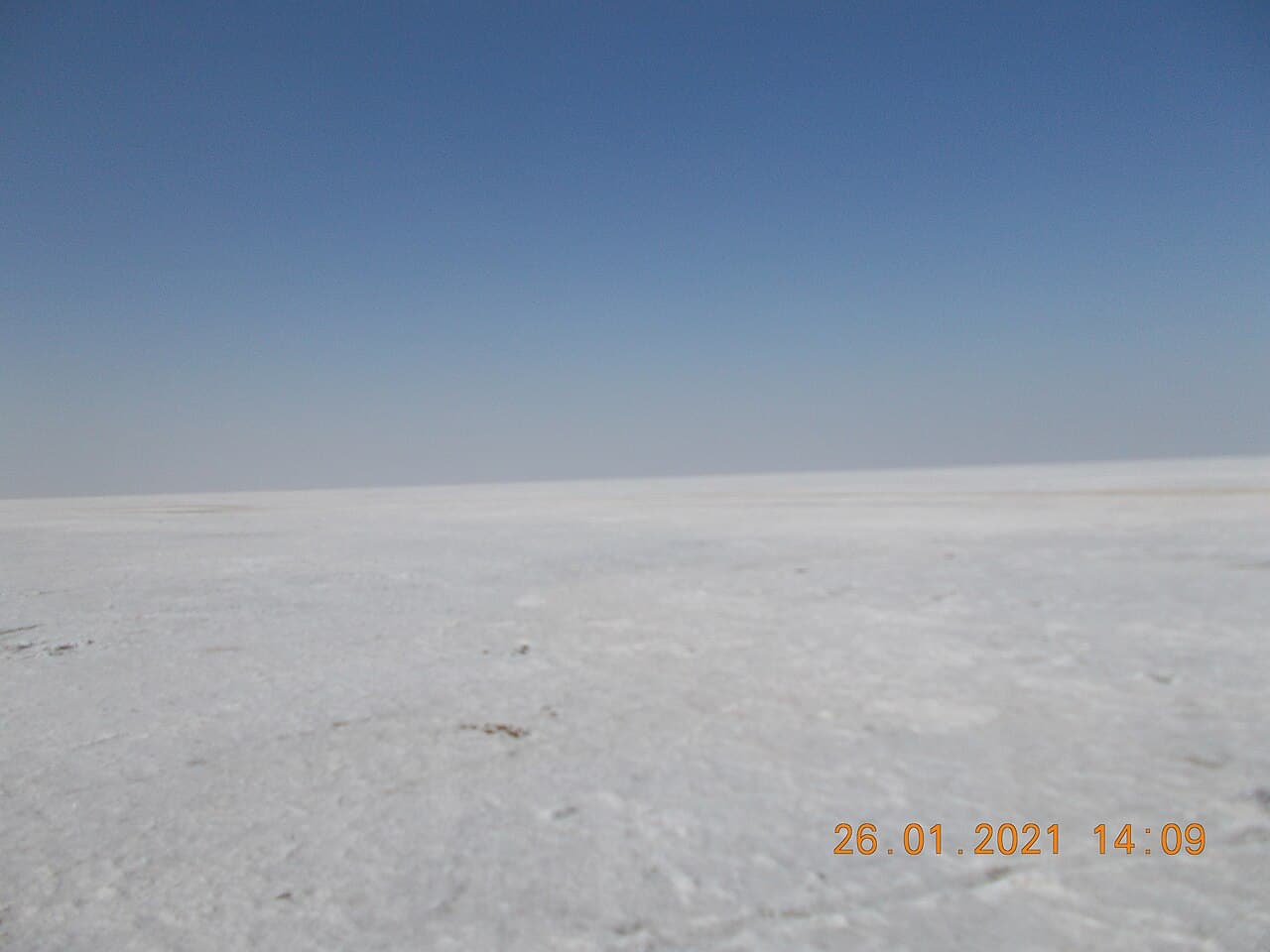
Expect open grassland stretching to both horizons, especially striking in the low light of early morning or late afternoon departures, when the cured winter grass takes on a genuinely silver-gold cast. Watch for scattered acacia trees standing alone in the flats, and for herds of buffalo or cattle grazing at some distance from the road, usually with little visible fencing — Banni's grazing system rarely relies on enclosure. Small nesses appear intermittently, simple clusters of thatched or mud-walled structures, sometimes with informal roadside stalls selling dairy products or handicrafts. Later in the stretch, as the road approaches the Rann proper, the grass thins and gives way to the white salt flat itself — a transition abrupt enough that first-time visitors often ask their driver to stop.
A few practical notes are worth knowing before the drive. Banni has essentially no facilities for casual tourist stops — there are no cafés, fuel stations, or formal viewpoints along most of the stretch, so plan any breaks before entering the grassland proper. Photography from the roadside is generally fine, but the nesses are private homes and working settlements, not attractions; a respectful distance and a wave, rather than an uninvited approach with a camera, is the right instinct. If travelling with a guide or driver familiar with the area, asking them to slow down or point out a particularly good grassland stretch, or a herd of Banni buffalo near the road, is a reasonable request and often rewarded with genuine local knowledge.
Why This Stretch of the Journey Matters
It is easy to treat Banni as scenery to be endured on the way to the destination — the long, flat middle section between Bhuj's airport and Dhordo's white tents. But the grassland is not a blank interval. It is one of the ecological reasons the Rann exists as it does, and it is home to a community whose entire cultural and economic life has been shaped by centuries of careful, continuous relationship with this specific piece of land. The Rann Utsav festival itself sits at the edge of Banni's territory — the things to do around Dhordo village, from craft demonstrations to folk performances, draw directly on traditions that Banni's pastoral and artisan communities, including the Maldharis, have sustained for generations, often quietly, well outside the festival's spotlight.
Seen this way, the drive from Bhuj to Dhordo is not downtime before the holiday begins. It is the first chapter of it.
To build a Banni excursion into your Rann Utsav itinerary, call our team on +91 92747 30220. Tent City packages start from ₹6,300 per person for a one night, two day stay.